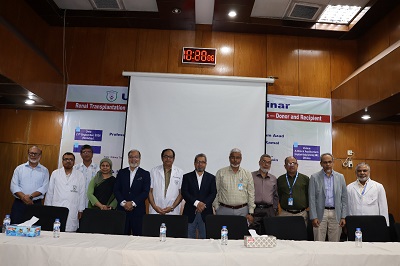

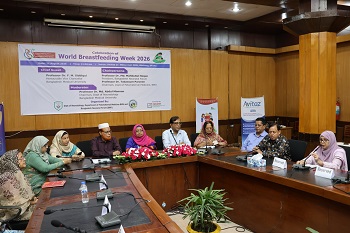
Breast milk is a priceless gift for newborns and mothers. It is an evidence-based and effective way to save the life of the newborn and play a significant role in healthy growth. Health authorities in Bangladesh recommend starting breastfeeding within the first hour of birth, exclusive breastfeeding for the first six months after birth, and breastfeeding for two years or more along with safe and nutritious complementary foods after six months, following the recommendations and standards of the World Health Organization (WHO). This information was shared at a program organized by the Department of Neonatology, Department of Phytomaternal Medicine, BMU, and the Bangladesh Neonatal Forum on the occasion of World Breastfeeding Week 2026, on Tuesday, August 11, 2026, at the Shaheed Dr. Milton Hall of BMU. The program was chaired by Treasurer of BMU, Professor Dr. Nahrin Akhtar. Chaired by Professor Dr. Tabasus Parveen, Chairman of the Department of Phytomaternal Medicine, and Professor Dr. Md. Mahbubul Haque. The moderator of the panel expert session was Professor Dr. Md. Abdul Mannan, Chairman of the Neonatal Department of BMU. The papers were presented by Professor Dr. Sufia Khatun, resident student Dr. Sharmin Jahan, Dr. Nadia Sharmin. The program was moderated by Dr. Sadeka Chowdhury Moni, Associate of the Neonatology Department of BMU, and Professor Dr. Md. Mojibur Rahman, Professor Dr. Tahmina Begum, Professor Dr. Samina Chowdhury, Professor Dr. Sanjay Kumar Dey, among others. The speakers said that increasing breastfeeding rates worldwide could prevent more than 800,000 child deaths each year. About 11.6 percent of all deaths in children under five are linked to inadequate or inappropriate breastfeeding practices. Breastfeeding within the first hour of birth, followed by exclusive breastfeeding for six months and continued breastfeeding for two years or beyond – acts as a powerful protective mechanism against all forms of child malnutrition, such as childhood underweight/wasting (SWMT) and obesity (Obsession). The event was informed that despite the growing evidence on the benefits of breastfeeding for both mothers and newborns, the practice of breastfeeding in practice has not yet reached the desired level. In Bangladesh, the rate of breastfeeding within the first hour of birth is only 40 percent and the rate of exclusive breastfeeding up to six months is 53 percent. The deterioration of these indicators compared to previous data is very worrying and it is necessary to take urgent and effective steps to improve the situation. The event said that World Breastfeeding Week is celebrated every year from 1 to 7 August. Its aim is to raise awareness about the unparalleled health, nutritional and economic benefits of breastfeeding worldwide and to ensure that mothers have the right and necessary support to breastfeed. The official theme for 2026 is: “Breastfeeding for a sustainable start in life: Strengthening what works” (Breastfeeding for a sustainable start in life: Strengthening what works). The main goals of this year’s campaign are to monitor progress in breastfeeding, scale up proven and effective community and health system-based initiatives, and strengthen the ‘warm chain of support’ (WHS) to ensure uninterrupted breastfeeding support. To this end, it is necessary to assess existing national and regional policies on child and adolescent nutrition and breastfeeding. At the same time, by analyzing successful policies, programs and effective frameworks in countries and populations with relatively high rates of exclusive breastfeeding, suitable initiatives can be implemented and expanded in the context of Bangladesh. Effective initiatives that have been proven to ensure successful breastfeeding practices include: skilled and trained breastfeeding advice and counseling; baby-friendly hospital initiatives (BFHIs); media-based awareness campaigns; legal and policy measures to protect breastfeeding; adequate and paid maternity leave; and creating a supportive and conducive environment for mothers to breastfeed in the workplace. The learned panelists mentioned that breastfeeding is not an isolated issue. When mothers receive skilled and compassionate support, positive support from family and society, and a mother-friendly workplace, breastfeeding practices are more successful and sustainable. Therefore, it is important to strengthen coordinated initiatives at every level of the health system, workplace, family and community to ensure uninterrupted, accessible and respectful support for mothers and babies. A supportive society and community must be built where every family receives the necessary support and respect to achieve the goal of how they want to feed their babies. This can be one of the main ways to ensure sustainable breastfeeding practices. The combined role of everyone, including the family, community, health system, workplace and government, is very important to make this effort sustainable and effective. Only through collective initiatives can we ensure a supportive, safe and sustainable environment for breastfeeding for every mother and baby. Edited by Dr. Saiful Azam Ranju.
Chairman Editorial Board : Md. Shajahan Mia
Chief Editor : Md. Humayoun Rashid, Editor : Ayub Ali Sarder
Publisher : Tahmina Akter Saima
Office : Motaleb Mansion (5th Floor), 2 R. K. Mission Road, Dhaka -1203 Phone : 01711681147,01710453070
Email : morningobserver@gmail.com
All rights reserved © 2025 dailymorningobserver