Providing training on Evidence-Based Medicine to 269 BMU faculty members to ensure scientifically sound medical services, including reducing medical costs for patients
Pijush Kumar Biswas :
/ ১৬৫
Time View
Update :
সোমবার, ২২ জুন, ২০২৬
Share
Providing training on Evidence-Based Medicine to 269 BMU faculty members to ensure scientifically sound medical services, including reducing medical costs for patients
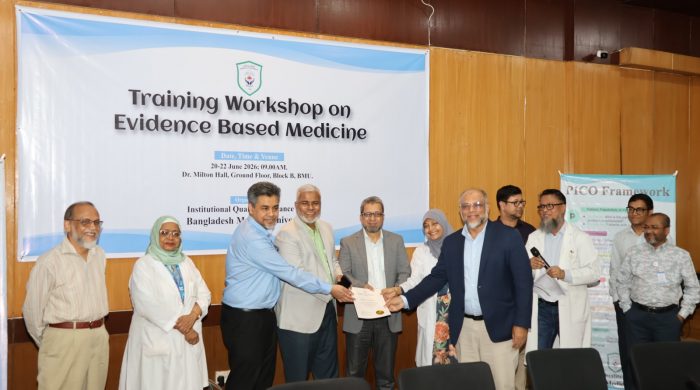
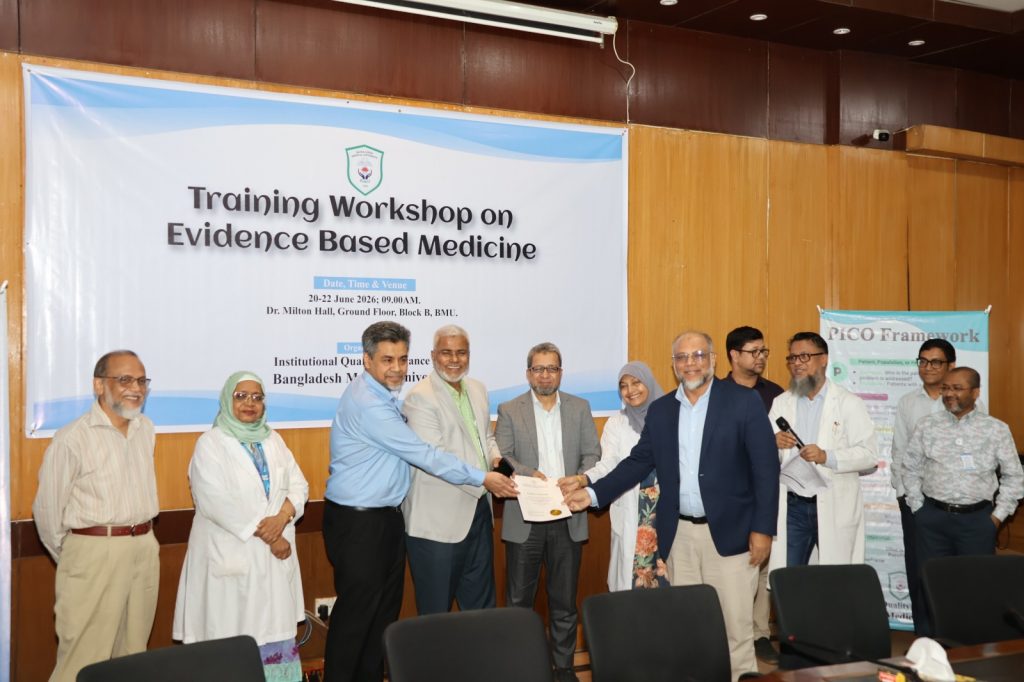
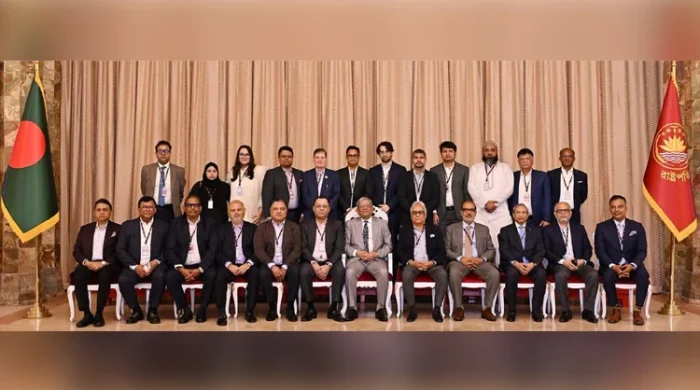
269 esteemed faculty members and senior doctors from various departments of BMU have been trained on Evidence-Based Medicine (EVM). Evidence-based medicine can greatly contribute to reducing the medical costs of patients, ensuring the provision of scientifically sound medical services, and improving the quality of medical services, medical education, and research. To achieve this goal, the Institutional Quality Assurance Cell (IQAC) of the university organized 10 batches of training workshops. The closing day of the three-day training workshop of the 10th batch is Monday, July 22, 2026, at Shaheed Dr. Milton Hall. Certificates were distributed among the esteemed teachers who participated...
৩৮
269 esteemed faculty members and senior doctors from various departments of BMU have been trained on Evidence-Based Medicine (EVM). Evidence-based medicine can greatly contribute to reducing the medical costs of patients, ensuring the provision of scientifically sound medical services, and improving the quality of medical services, medical education, and research. To achieve this goal, the Institutional Quality Assurance Cell (IQAC) of the university organized 10 batches of training workshops. The closing day of the three-day training workshop of the 10th batch is Monday, July 22, 2026, at Shaheed Dr. Milton Hall. Certificates were distributed among the esteemed teachers who participated in the training workshop. At this time, the Vice-Chancellor-in-Charge and Pro-Vice-Chancellor (Administration) of the university, Professor Dr. Md. Abul Kalam Azad, Pro-Vice Chancellor (Academic) Professor Dr. Md. Nazrul Islam, Pro-Vice Chancellor (Research and Development) Professor Dr. Md. Mujibur Rahman Howlader, Treasurer Professor Dr. Nahrin Akhtar and others were present. The program was presided over by IQSC Director Professor Dr. Nurun Nahar Khanam and moderated by IQSC Additional Director Associate Professor Cardiologist Dr. Deen Mujahid Md. Faruk Osmani. In the three-day training workshop, scholars presented important informative articles on the relevant subjects. In this training workshop, detailed focus was given on the topics of Pico Framework, The Importance of Medical Audit, Clinical Audit Cycle, etc.
On the concluding day of the workshop, Vice-Chancellor-in-Charge and Honorable Deputy Vice-Chancellor (Administration) of the university, Professor Dr. Md. Abul Kalam Azad, Deputy Vice-Chancellor (Academic) Professor Dr. Md. Nazrul Islam, Deputy Vice-Chancellor (Research and Development) Professor Dr. Md. Mujibur Rahman Howlader, Treasurer Professor Dr. Nahrin Akhtar and others spoke. They said that the importance of evidence-based medicine in clinical practice is immense. Because doctors always have to take care of the patient’s thoughts, interests and rights. In medical science, there is no alternative to acquiring the necessary knowledge about evidence-based medicine for doctors and gaining skills and knowledge through training in this regard. Evidence-based medicine is making a great contribution to improving the public standard of medical education. Therefore, acquiring knowledge about evidence-based medicine for teachers and doctors involved in the medical profession has now become the need of the hour. The learned speakers mentioned that if evidence-based decision-making can be implemented at every level of research, medical care and education, it will be possible to build a fair and efficient health system, which will further strengthen the trust of patients and the public. At the same time, by encouraging the practice of evidence-based medicine, new horizons of qualitative change in the healthcare sector will be opened, including ensuring the rights of patients. It is worth noting that with the support of Oxford University, Bangladesh Medical University (BMU) celebrated the first-ever ‘World Evidence-Based Healthcare Day’ to promote evidence-based healthcare. BMU has also earned the title of ‘Evidence Ambassador’ as an international recognition. Edited by Dr. Md. Saiful Azam Ranju.