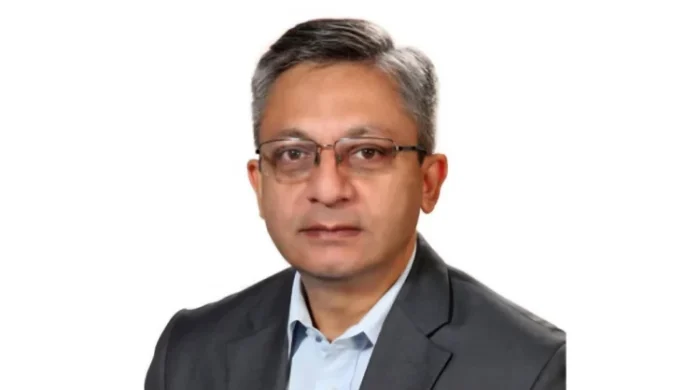
Rally and scientific seminar held at BMU to mark Global Fatty Liver Day 2026
Pijush Kumar Biswas:
/ ১৭৫
Time View
Update :
বৃহস্পতিবার, ১১ জুন, ২০২৬
Share
Rally and scientific seminar held at BMU to mark Global Fatty Liver Day 2026
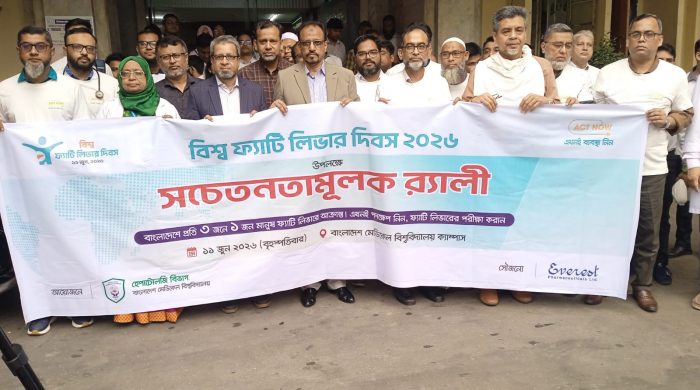
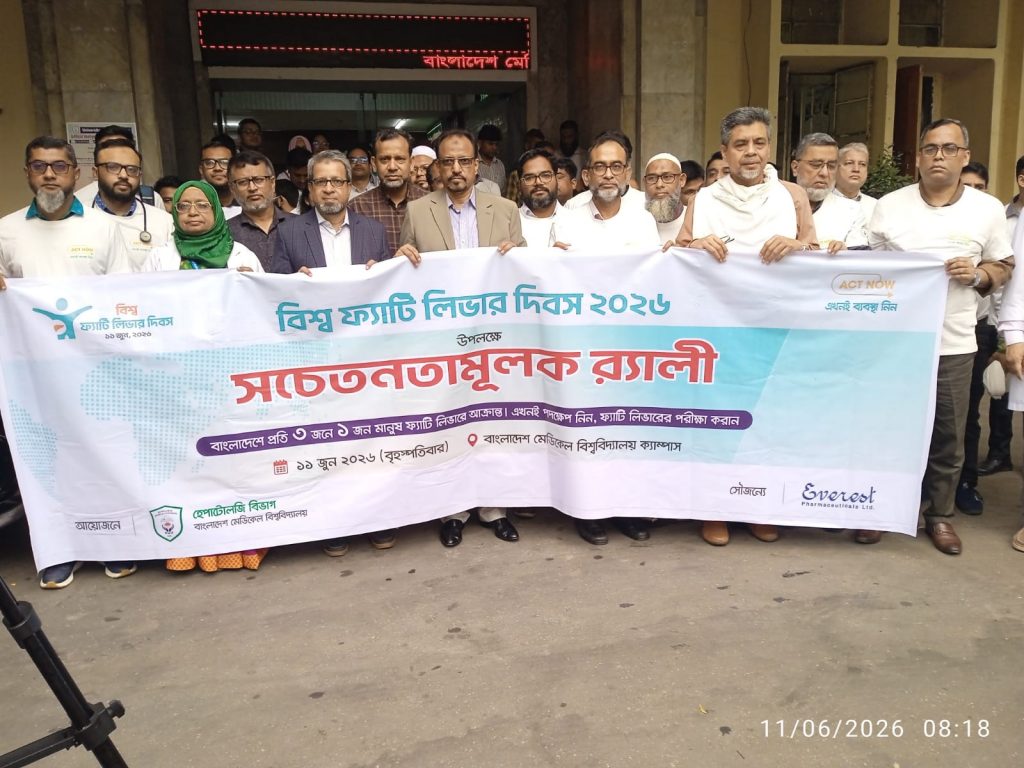
A rally and scientific seminar was held on the occasion of Global Fatty Liver Day 2026 at the initiative of the Department of Hepatology at Bangladesh Medical University (BMU). It was informed that MAFLD is one of the main causes of chronic liver disease that is increasing rapidly. To save people including affected patients from this important health problem, emphasis was placed on targeted treatment and public awareness. Yesterday, Thursday, June 11, 2026, the rally, which started from the front yard of B Block, was inaugurated as the chief guest by the Vice Chancellor of BMU, Professor Dr. FM Siddiqui....
৫৫
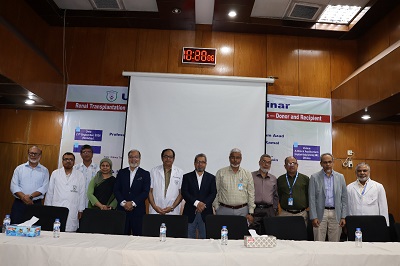
A rally and scientific seminar was held on the occasion of Global Fatty Liver Day 2026 at the initiative of the Department of Hepatology at Bangladesh Medical University (BMU). It was informed that MAFLD is one of the main causes of chronic liver disease that is increasing rapidly. To save people including affected patients from this important health problem, emphasis was placed on targeted treatment and public awareness. Yesterday, Thursday, June 11, 2026, the rally, which started from the front yard of B Block, was inaugurated as the chief guest by the Vice Chancellor of BMU, Professor Dr. FM Siddiqui. Later, a scientific seminar titled “Targeted Therapy in Metabolic Dysfunction–Associated Fatty Liver Disease (MAFLD)” was held at Shaheed Dr. Milton Hall. Professor Dr. Md. Shahinul Alam, Chairman of the Department of Hepatology, presided over the event. The seminar was attended as special guests by BMU’s Pro-Vice Chancellor (Academic) Professor Dr. Md. Nazrul Islam, Pro-Vice Chancellor (Administration) Professor Dr. Md. Abul Kalam Azad, Pro-Vice Chancellor (Research and Development) Professor Dr. Md. Mujibur Rahman Howlader, Treasurer Professor Dr. Nahrin Akhtar, Registrar Professor Dr. Md. Mostafa Kamal, Proctor Professor Dr. Sheikh Farhad. These events highlighted that MAFLD is currently one of the leading causes of chronic liver disease worldwide and is emerging as an important cause of cirrhosis, liver cancer and the need for liver transplantation in the future. Therefore, it is very important to increase public awareness about the disease, ensure screening of at-risk populations and timely treatment. By observing Global Fatty Liver Day, it is called for bringing fatty liver disease from a “silent epidemic” to a public health priority and emphasis is placed on taking multifaceted and integrated initiatives to combat MAFLD. The Chief Guest, Vice Chancellor Professor Dr. FM Siddiqui, in his speech, highlighted the importance of healthy lifestyle, regular physical exercise and early detection of the disease in preventing fatty liver disease. He thanked the Department of Hepatology for raising awareness among doctors and the general public through such scientific initiatives. The keynote address of the seminar was presented by Associate Professor Dr. Md. Saiful Islam Elin, Department of Hepatology. He discussed the increasing global and national burden of metabolic dysfunction-associated fatty liver disease (MAFLD), modern methods of diagnosis, and the potential of emerging targeted therapies including GLP-1 receptor agonist, SGLT2 inhibitor, THR-β agonist, FGF21 analogue, FXR agonist. Associate Professor Dr. Md. Saiful Islam Elin said that a significant change is being seen in the treatment of liver diseases. Researchers and physicians are now increasingly focusing on targeted treatment approaches for metabolic dysfunction-associated fatty liver disease (MAFLD). Millions of people worldwide are affected by this disease. Currently, obesity and metabolic disorders MAFLD are considered a major public health problem associated with diabetes, heart disease, and serious liver complications. Associate Professor Dr. Md. Saiful Islam Elin said that metabolic dysfunction-associated fatty liver disease (MAFLD) is a condition in which excess fat accumulates in the liver. It is mainly caused by type-2 diabetes, high blood pressure or a defect in the body’s metabolic processes. It was previously known as non-alcoholic fatty liver disease. The incidence of MAFLD is increasing rapidly in both developed and developing countries due to the increase in obesity, insulin resistance and type-2 diabetes. Dr. Md. Saiful Islam Elin said that according to health experts, if not treated properly, MAFLD can gradually develop into liver inflammation, fibrosis, cirrhosis and even hepatocellular carcinoma (liver cancer). As a result, early diagnosis and effective treatment strategies have become very important. Lifestyle changes have long been the mainstay of MAFLD management. Weight loss, a healthy diet, and regular exercise are still very important. However, health researchers have come to realize that the disease is associated with multiple biological processes and that its causes and progression may vary from patient to patient. This realization has accelerated the development of targeted therapies, which target specific biological processes responsible for the progression of the disease. These include insulin resistance, inflammation, lipid metabolism disorders, oxidative stress, and fibrosis. Dr. Elin added that MAFLD is not a single disease. Understanding the underlying metabolic and molecular causes of the disease will allow for more personalized treatment options for patients. This could radically change the treatment of liver disease and open new hope for the millions of people affected by MAFLD. Edited by Dr. Md. Saiful Azam Ranju.