
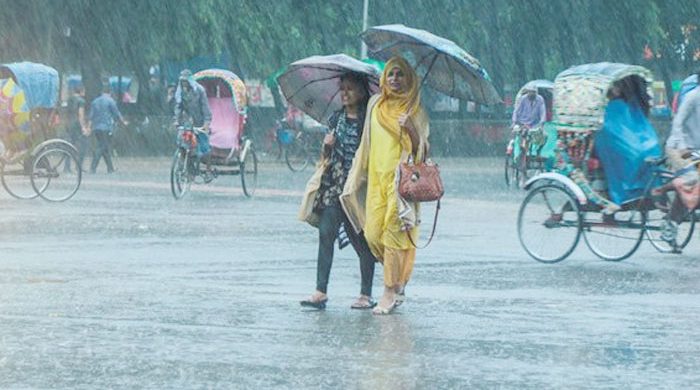
In the last five decades (half a century), monsoon rainfall in Rajshahi has decreased by about 34 percent. At the same time, the temperature is continuously increasing. Along with this, the groundwater level is going down. Due to the decrease in rainfall, the water crisis in the Barendra region, one of the drought-prone regions of the country, is deepening and agriculture, livelihoods and long-term water security are increasingly facing a major threat, according to a study.
A research paper recently published in the international research journal Cleaner Water said that the impact of climate change, reduced rainfall, excessive use of groundwater and institutional non-cooperation may continue in the Rajshahi region until 2032. The study titled Extreme Climate and Hydroclimate Modeling of Water Stretch: Complications for Livelihoods in Rajshahi, Bangladesh was conducted by a group of researchers from the Department of Geography and Environment, University of Dhaka. The study analyzed satellite images, long-term data from the Meteorological Department, groundwater data, and field surveys conducted on 385 households in 13 upazilas of Rajshahi. The study found that the average monsoon rainfall in Rajshahi between 1978 and 1990 was 1,406 millimeters. But between 2011 and 2024, it decreased to 925 millimeters. That is, rainfall has decreased by about 34 percent in a few decades. The study found that rainfall is decreasing by an average of about 12 millimeters per year. In addition, the number of days with temperatures above 35 degrees Celsius in a year could increase from 13 days in 2018 to about 195 days in 2078, the study said. According to the study, the groundwater level in Rajshahi has dropped by an average of 3.78 meters in the last 35 years. While the average depth of groundwater was 11.66 meters in 1990, it increased to 15.44 meters in 2024. According to the researchers, this situation has been created due to excessive groundwater extraction for agricultural purposes, especially in the areas under the jurisdiction of the Barendra Multipurpose Development Authority (BMDA). The experiences of people who participated in the field survey are also consistent with the results of the study. More than 61 percent of the respondents who participated in the survey said that the water crisis is negatively affecting their income and livelihood. More than 95 percent of the people said that they have to spend extra money to collect and ensure water for daily use. According to the researchers, reducing the over-reliance on water-dependent rice cultivation and strengthening coordination between government agencies related to agriculture and water management will make it possible to achieve effective progress in addressing the growing water crisis in Rajshahi.
Chairman Editorial Board : Md. Shajahan Mia
Chief Editor : Md. Humayoun Rashid, Editor : Ayub Ali Sarder
Publisher : Tahmina Akter Saima
Office : Motaleb Mansion (5th Floor), 2 R. K. Mission Road, Dhaka -1203 Phone : 01711681147,01710453070
Email : morningobserver@gmail.com
All rights reserved © 2025 dailymorningobserver