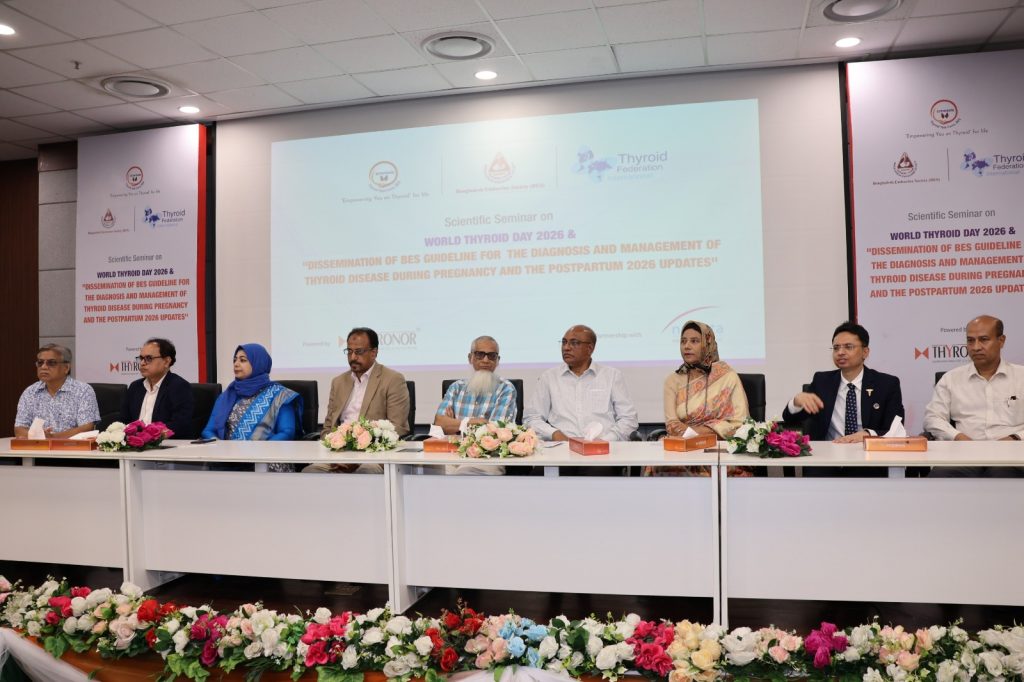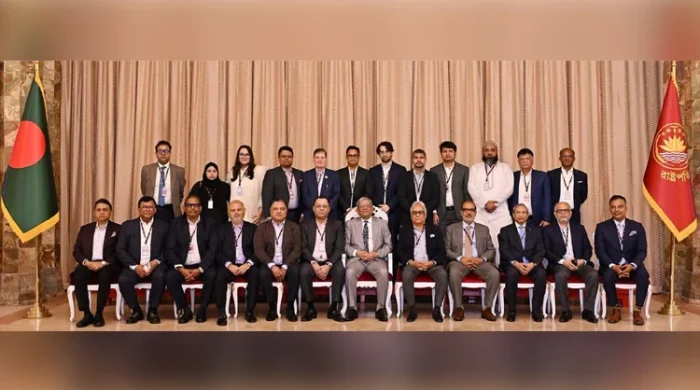

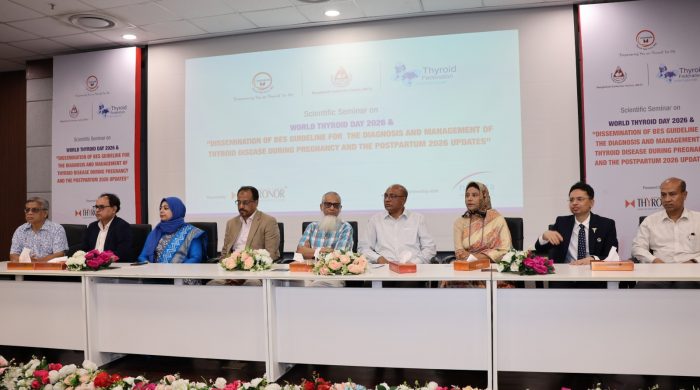
The Thyroid Task Force, Bangladesh Endocrine Society, launched the latest medical guidelines for thyroid awareness and management of thyroid diseases during pregnancy and postpartum at the lecture hall of the Super Specialized Hospital of Bangladesh Medical University (BMU) on Wednesday, May 20, 2026. On this occasion and in view of World Thyroid Day 2026, a special scientific seminar was organized to reach out to doctors and public health workers. The theme this time is proper nutrition to maintain thyroid health. The chief guest at these events was Vice Chancellor of BMU, Professor Dr. FM Siddiqui. In his speech, the Vice Chancellor mentioned that the latest medical guidelines for the management of thyroid diseases during pregnancy and postpartum will play a special role in evidence-based medicine practice and emphasized the importance of diagnosing the disease, including thyroid testing of newborns after birth. The seminar informed that the organizing doctors hope that this new guideline will play a very important role in resolving thyroid complications during pregnancy, reducing the risk of premature birth, miscarriage, maternal and infant mortality, and delivering healthy children. It will serve as a practical guide, especially for doctors at the marginal level of the country. The seminar was presided over by Dr. Faria Afsana, President of Bangladesh Endocrine Society (BES). The special guest was Professor Dr. Md. Faruk Pathan, Director (Academy) of BIRDEM. The keynote speaker was Dr. Shahzada Selim, President-elect of BES and Coordinator of Thyroid Task Force, and Dr. M. Saifuddin, General Secretary of Bangladesh Endocrine Society. The panel of experts included Professor Dr. AKM Fazlul Bari, Director of NINMAS and President of Bangladesh Thyroid Society, Professor Dr. M. A. Hasnat, Chairman of the Endocrinology Department of BMU, Professor Dr. Sheikh Zinat Ara Nasreen, Professor of ZH Sikder Women’s Medical College and Hospital, and Professor Dr. Md. Hafizur Rahman, Professor of Continental Hospital. The moderator was Dr. Syed Ajmal Mahmud, Member Secretary of Thyroid Task Force and BES. Professor Dr. AKM Fazlul Bari, Director of NINMAS and President of Bangladesh Thyroid Society, said, “The thyroid is a small but powerful gland that is very important for the overall health of the human body. Thyroid screening is mandatory at four times in life: after birth, during puberty, before pregnancy for mothers and after the age of 50.” Professor Dr. Bari also said that a new method in thyroid treatment can be used to remove tumors through radiofrequency and microwave. In this case, the tumor can be removed only through a needle without any incision; it does not require the patient to be unconscious, or the patient does not need to stay in the hospital, and this method has no major side effects, and the cost will also be low. The tumor ablation method will contribute to the treatment of thyroid problems and liver cancer of the people of the country. The seminar said that the thyroid is a small butterfly-shaped gland located in front of the trachea at the bottom of the throat. It mainly secretes two hormones: thyroxine FT4 and tri-iodothyronine FT3. These hormones control the body’s metabolism, heart rate, body temperature, and the physical and mental development of children. Hypothyroidism: When the gland produces less hormone than needed, fatigue, weight gain, depression, and constipation occur. Hyperthyroidism: When the gland produces more hormone, palpitations, weight loss, hand tremors, and excessive sweating occur. The thyroid gland can be compared to an engine, the proper fuel of which is nutrition. Without certain minerals and vitamins, the production of thyroid hormones is impossible. The essential elements are iodine such as iodized salt, sea fish, dairy products, eggs. Selenium such as Brazil nuts, tuna, chicken, sunflower seeds. Zinc such as beef, pumpkin seeds, chickpeas, lentils. Iron and vitamin D. Lack of iron disrupts the functioning of thyroid enzymes. Vitamin D deficiency is common in thyroid patients. Be careful with goitrogenic foods. For example, cabbage, cauliflower, broccoli and soybeans contain goitrogens which prevent iodine absorption. However, cooking greatly reduces the harmful effects of these goiters. Goiter patients can eat these vegetables cooked in moderation. What to avoid are caffeine and alcohol, excess sugar and processed foods (white flour, sugary drinks). In terms of lifestyle, stress control, 7-8 hours of deep sleep daily, regular walking, yoga or gentle exercise, etc. are necessary. The seminar called on all concerned doctors, researchers, and health workers to take the initiative in further research on thyroid diseases, provide proper treatment to patients, and engage in comprehensive activities to prevent the disease. Edited by Dr. Saiful Azam Ranju.
Chairman Editorial Board : Md. Shajahan Mia
Chief Editor : Md. Humayoun Rashid, Editor : Ayub Ali Sarder
Publisher : Tahmina Akter Saima
Office : Motaleb Mansion (5th Floor), 2 R. K. Mission Road, Dhaka -1203 Phone : 01711681147,01710453070
Email : morningobserver@gmail.com
All rights reserved © 2025 dailymorningobserver