
Experts say that if not only farmers can harvest their paddy on time, the food system of the entire country may be at risk. As a result, uninterrupted supply of diesel must be ensured in agriculture.
Fuel-dependent agriculture, use of diesel in five stages Currently, fuel is essential in every stage of paddy harvesting. Diesel has to be used in at least five stages, from harvesting, threshing, collection from the field, transportation and reaching the warehouse. Due to labor shortage and rising wages, farmers are now gradually becoming dependent on machinery. The use of combine harvesters has increased in paddy harvesting. With this machine, it is possible to harvest, thresh and bag rice at the same time. However, it is completely diesel-powered. Similarly, threshers, bomb machines, tractors, trolleys and boats are dependent on fuel. However, farmers are in trouble as the supply of diesel in Tanore is insufficient compared to the demand.
Durul Huda, a farmer of Panchandar Union (UP) of Tanore, said that this time he cultivated paddy on three acres of land. Due to labor shortage and high wages, he has to rely on machinery. But he had to buy diesel worth 103 taka for 130 taka. This has increased the cost of production a lot. He expressed his concern and said that if this crisis continues throughout the entire paddy harvesting period, then the farmers will face big losses. Shakir, a farmer from the Tanor municipal area, said that he has not been able to find workers to harvest paddy for a few days. Due to the lack of price of paddy, the workers are expressing their reluctance to harvest paddy. Even if the workers harvest paddy, they do not want to carry it. They are transported by car. But due to lack of oil, the cars are closed. If there is a storm or rain at any time in the month of Baishakh, the condition of the ripe paddy will deteriorate. Another farmer, Saheb Ali, said that in previous years, before harvesting paddy, the workers would check the land to see when it will be harvested and when to come. But this time the picture is completely opposite. The paddy is ripe, it is the right time to harvest. But the workers are not available. The extreme temperature has started again. Almost the paddy in the low-lying land of the beel has sunk to the ground. When it sinks to the ground, the workers do not want to harvest. Even if they do harvest, it costs twice as much.
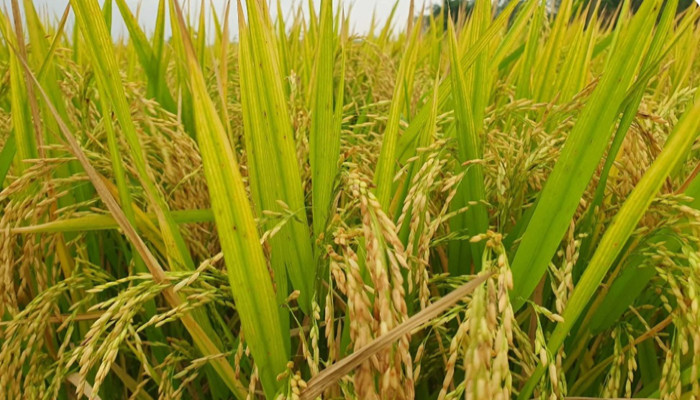
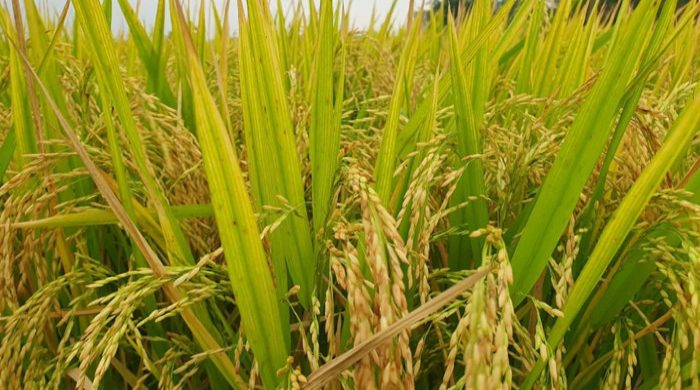
It can be seen on the ground that most of the Boro land of farmers in the Tanor municipal area including Damdama, Gagrand, Hardah, Juranpur of Chanduria UP of the upazila is in the bill. Kaliganj, Masinda, Habibnagar, Buruj, Bhadrakhand, Kasimbazar, Jiol, Chandpur, Amsho, Mathurapur, Sarkarpara, Tatialpara, Gollapara, Haldarpara, Tanorpara, Kuthipara, Hindupara, Gubirpara, Sindukai, Dhantayar, Chapra, Gokul, Talanda Collegepara, Belpukuria, Baharia, Sumaspur, Haridevpur, and Kamargaon UP in the west, north, east and south of the Labiyatala bridge are Hatishail, Barogharia, Hatinanda, Kamargaon, Kachua, Damdama, Majumdarpara, Srikhanda, Krishnapur, Bataspur, The land of Bilkumari Beel is located below these villages including Parisho, Durgapur, Maria, Madaripur, Bhawanipur, Jamshedpur, Biharil, Malshira, Dhanora, Chakkajijia, Kalma UP’s Kujishahar, Chandabkotha. The paddy of almost all the lands has ripened. The paddy in the high areas of the beel is upright, while the paddy in the low areas has sunk to the ground. Many farmers including Saminul and Arshad of Taland area said that it is not possible to cultivate paddy. Due to the shortage of fertilizers, fuel shortage, and the collapse in prices, paddy cannot be harvested due to the shortage of laborers. The price of one maund (38 kg) of paddy is 1,100 to 1,120 taka. But the wage of a worker is 800 taka. This time, the yield of paddy in one bigha (33 hundredths) of land has been 16 to 20 maunds.
The biggest problem is faced by farmers cultivating in Bilpar. Because the boro paddy in the entire field of Bilpar has ripened. If they cannot harvest this paddy within a week, they will face problems. However, they are not getting workers to harvest paddy.
Saifullah Ahmed, Upazila Agriculture Officer of Tanor, said that the land of Bil from Chanduria in the upazila to Chaubaria Malshira in Kamargaon UP. Boro is cultivated in advance in these lands. Boro has been cultivated in about 3,500 hectares of land in Bil. Almost all the paddy is ripe. This time, Boro has been cultivated in 14,130 hectares of land in the upazila. He also said that in any case, paddy has to be harvested as soon as possible. Because it is the month of Baishakh. Any natural disaster can come at any time and make the situation abnormal.
Chairman Editorial Board : Md. Shajahan Mia
Chief Editor : Md. Humayoun Rashid, Editor : Ayub Ali Sarder
Publisher : Tahmina Akter Saima
Office : Motaleb Mansion (5th Floor), 2 R. K. Mission Road, Dhaka -1203 Phone : 01711681147,01710453070
Email : morningobserver@gmail.com
All rights reserved © 2025 dailymorningobserver