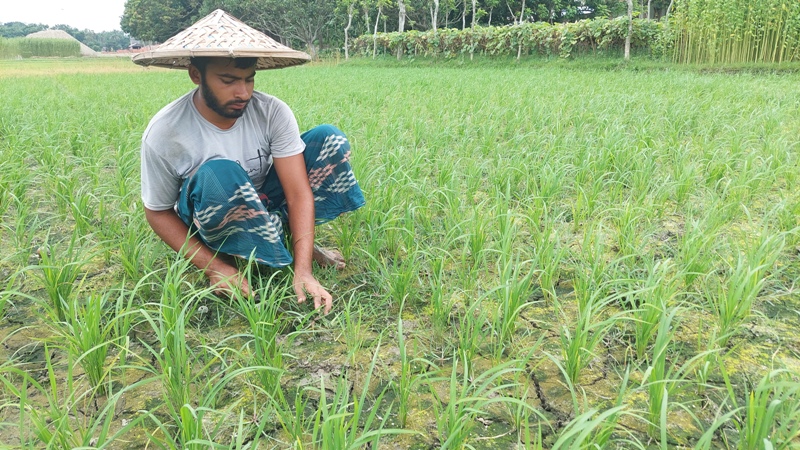

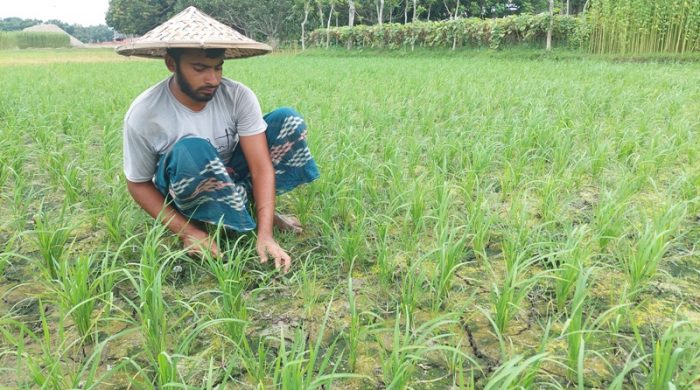
Farmers who come to sell paddy at the markets and markets of this region say that traders are not coming from outside districts. Even small vehicles are not available for rent to take paddy from one market or market to the market or market of the neighboring district. As a result, the price of paddy in the north-western region including Rajshahi has decreased by 300-350 taka per maund in a month. In some places, it has decreased by 400 taka per maund. As a result, they are facing losses by selling paddy at low prices.
In addition, rice mill owners who used to buy paddy from major centers in Rajshahi, Naogaon, and Chapainawabganj have also reduced their purchases.
Because, they are also unable to send rice from the northern region to various parts of the country including the capital Dhaka due to transportation crisis. The overall impact of the fuel crisis has been on the farmers’ paddy. According to the Agricultural Information Division of the Department of Agricultural Extension, 2.15 crore metric tons of paddy were produced in the country in the last Aman season.
Of this, 9 million metric tons of Aman have been produced in 16 districts of Rajshahi and Rangpur divisions. The highest paddy production in the north-western region is in Naogaon, Rajshahi, Bogra and Dinajpur districts. As paddy is easily available in these districts, more than four hundred automatic rice mills have been established. These mills produce a huge amount of paddy by breaking it every day.
Due to the demand for rice, farmers in this region have been getting good prices for their rice for several years. But due to the fuel crisis in the country due to the Iran war, there has been a transportation crisis for a month. And because of this, the price of rice is decreasing in the major rice growing areas of the northwestern districts. Farmers say that there are no buyers for rice in the markets and markets. There are no traders. The traders are not buying rice.
Director of the Department of Agricultural Extension Dr. Azizur Rahman said that due to the fuel crisis, there is some stagnation in the transport sector. Not only paddy, but also various types of agricultural products, including vegetables produced in the north-western districts, have seen some decline. However, we hope that the situation will return to normal soon.
Farmer Abu Bakkar, who came to sell paddy at Kesharhat market in Mohanpur, said, “Where per maund paddy was earlier sold for 1500-1600 taka, now it is being sold for 1200-1300 taka. The price of paddy has come down by 300-400 taka. Even the price of fine paddy has come down. As a result, we are facing financial losses.”
Rafiqul Islam, president of the Rajshahi Rice Mill Owners Association, said the energy crisis has also affected agricultural products. Due to the transportation crisis, people have to pay higher rent to buy paddy and bring it to the mill, which has also negatively affected the price of paddy.
On the other hand, Al Amin Sarkar, president of the Rajshahi Truck and Covered Van Owners Association, said that transport movement has decreased due to the fuel crisis. This has also had some impact on the movement of goods.
Chairman Editorial Board : Md. Shajahan Mia
Chief Editor : Md. Humayoun Rashid, Editor : Ayub Ali Sarder
Publisher : Tahmina Akter Saima
Office : Motaleb Mansion (5th Floor), 2 R. K. Mission Road, Dhaka -1203 Phone : 01711681147,01710453070
Email : morningobserver@gmail.com
All rights reserved © 2025 dailymorningobserver