A visit to various filling stations in the city showed that all three types of fuel – petrol, octane and diesel – are in crisis. Drivers have to stand in long lines to collect fuel. Many are being forced to stop riding motorcycles. Irrigation activities are also being disrupted due to the lack of diesel, which is having a negative impact on agriculture.Although government sources deny the fuel shortage, consumers are seeing a different picture in reality. Despite having 44 filling stations and depots in Rajshahi, public anger is growing over not getting fuel as per demand. BGB has been deployed at some pumps to control the situation.
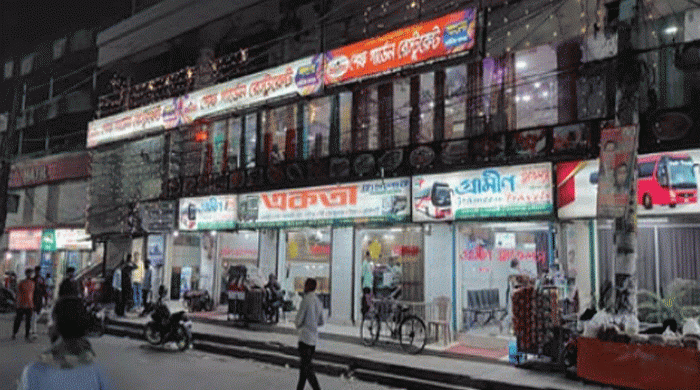
Meanwhile, anarchy has reached an extreme level in the transport sector due to the oil shortage. There have been allegations of charging more than the prescribed fare at bus terminals. Before Eid, passengers were charged Tk 500 to 600 more on the Rajshahi-Chittagong route. The same picture has been seen on the Sylhet route, which continues even after Eid.
Except for some established transports on the Dhaka route, most buses are charging Tk 100 to 150 more. The increase in fares is also noticeable on local routes. There are allegations of charging Tk 30-50 more on the Rajshahi-Naogaon route and buses plying in various upazilas including Chapainawabganj via Tanor. Tk 20-30 more is being charged on the Chapainawabganj route via Godagari.
There are allegations that passengers are being forced to pay the additional fare after boarding the bus on the pretext of fuel shortage. If they object, passengers are being threatened with being taken off the bus. They are even being pressured to keep the matter secret.
Ilias, a passenger going to Chittagong, said that although he paid Tk 1,600 before Eid, he is currently being demanded an additional Tk 400 more than the prescribed price. Khushbar Rahman, a Sylhet-bound passenger, raised a question and said that there is no explanation as to why the fare is being increased even though the government has not increased the price of oil.
Transport officials claim that they have to pay an additional Tk 1,000 to Tk 1,500 more to collect oil from the filling station, which is being collected from the passengers. However, they also said that the fare will be normalized once the crisis is over. Nazrul Islam Helal, General Secretary of the Rajshahi Road Transport Group, said that some drivers are charging extra fares on the pretext of the oil crisis. The matter will be discussed with the concerned authorities.
On the other hand, CNG drivers have also increased the fares. Complaints have been received of charging extra fares of Tk 30 to 50 on various routes from Rajshahi to Bagmara, Taherpur, Tanor, Mohanpur, Naogaon and Manda. There are also complaints that passengers are not being picked up if the stipulated fare is not paid.
Taherpur passenger Rahidul Islam complained on social media that drivers are creating an artificial crisis by syndicating and increasing fares. Passengers on the Naogaon and Chapainawabganj routes have also made similar complaints. Rajshahi CNG station master Hasan Al Mamun said that many drivers are buying fuel at higher prices because they are not getting fuel at the pump. They are increasing fares to cover the additional costs.
He sought the intervention of the concerned to resolve the crisis quickly. The concerned fear that if effective measures are not taken quickly, this artificial crisis of fuel oil could cause even greater disaster in the public life of Rajshahi.
Chairman Editorial Board : Md. Shajahan Mia
Chief Editor : Md. Humayoun Rashid, Editor : Ayub Ali Sarder
Publisher : Tahmina Akter Saima
Office : Motaleb Mansion (5th Floor), 2 R. K. Mission Road, Dhaka -1203 Phone : 01711681147,01710453070
Email : morningobserver@gmail.com
All rights reserved © 2025 dailymorningobserver