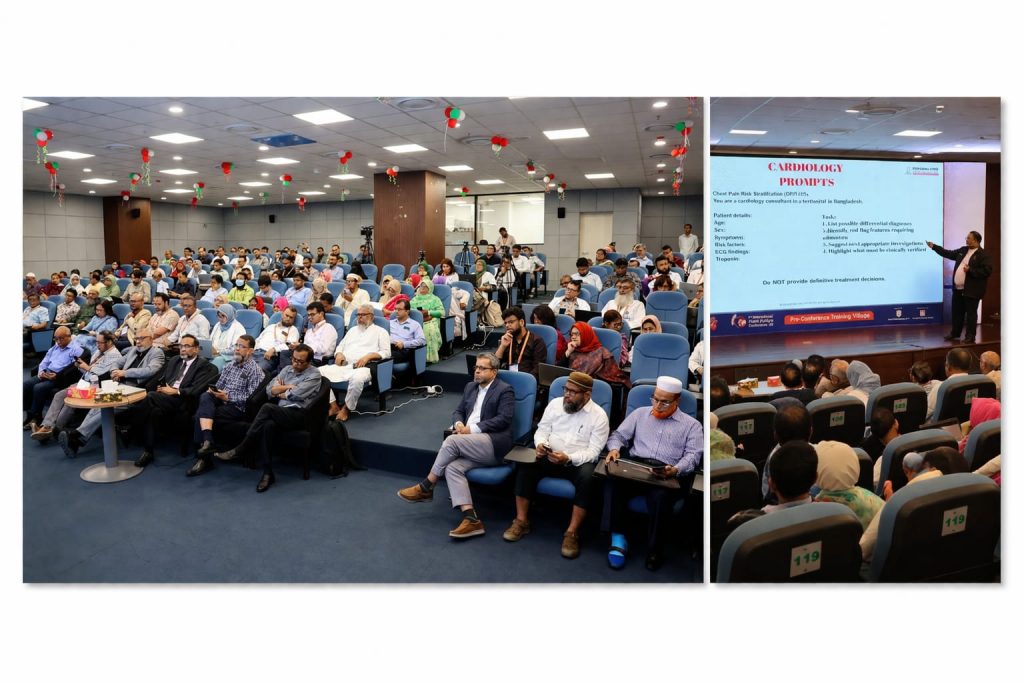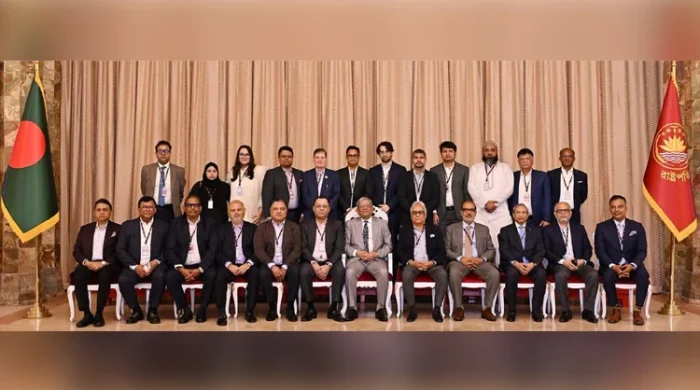

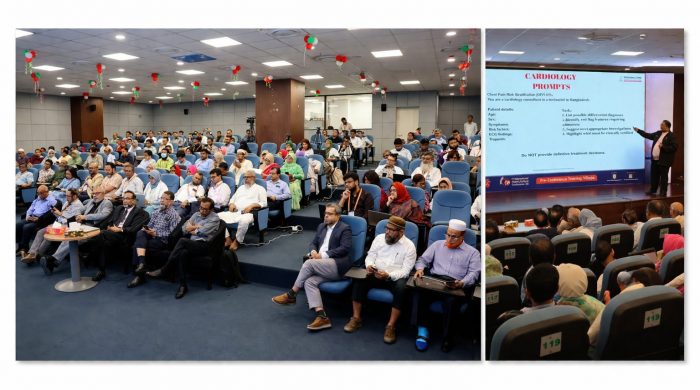
The P-Conference of the First International Heart Failure Conference 2026 was held today, Sunday, March 29, 2026. As part of the First International Heart Failure Conference 2026 to be held in Dhaka, a pre-conference workshop was held at BMU Super Specialized Hospital in the capital. The workshop highlighted the modern advances in Medical Artificial Intelligence, Cardiac Magnetic Resonance Imaging (Cardiac MRI), and Endomyocardial Biopsy. This is the first time in Bangladesh that hands-on training is provided on the modern use of AI-based diagnostics and advanced cardiac imaging technology. Experts at the event said that AI technology is playing an important role in the rapid identification, accurate diagnosis and determination of future risks of heart failure. In addition, cardiac MRI is considered the gold standard in accurately assessing the structure and function of the heart. Local and foreign cardiologists participated in the workshop and emphasized the implementation of advanced medical technology in Bangladesh. Those concerned believe that the combination of AI and modern imaging technology will open new horizons in heart disease treatment in the country. The pre-conference held in Room 507 of BMU’s Super Specialized Hospital was inaugurated by BMU’s Honorable Vice Chancellor Professor Dr. Md. Shahinul Alam. The welcome speech was delivered by Professor Dr. Mohammad Safiuddin of the Department of Cardiology. Malaysian Digital Health Expert Dr. Sultan Kaveri presented a detailed paper on AI-Based Medical Management. Professor Dr. Md. Atahar Ali of Evacare Hospital also spoke. In the second part of the program, the Cardiac MRI Workshop was chaired by Professor Dr. Manzoor Mahmud of the Department of Cardiology of BMU. Associate Professor Dr. Zafar Iqbal Jamali served as the Vice-Chair. The panelists were Professor Dr. Robert Manka of the University Hospital Zurich, Switzerland, Associate Professor Dr. Dine Mujahid Md. Faruk Osmani, Head of the Heart Failure Division of BMU, Associate Professor Dr. Mohammad Shahidul Haque. BMU’s Honorable Pro-Vice Chancellor (Research and Development) Professor Dr. Md. Mujibur Rahman Howlader, Chairman of the Department of Neonatology Professor Dr. Md. Abdul Mannan, and other cardiologists were present at the event. This important workshop was designed as an interactive training platform, which included live demonstrations and practical sessions. It covered topics such as AI-assisted cardiac imaging interpretation, cardiac MRI acquisition and analysis, integration of AI tools in clinical cardiology workflows, and case-based discussions in the diagnosis and management of heart failure. The sessions aimed to bridge the gap between emerging technologies and real-world clinical applications, which is in line with the conference theme of advancing heart failure treatment. Artificial intelligence is revolutionizing cardiovascular care, assisting at every step from patient selection to diagnosis and prognosis. AI systems can rapidly analyze large datasets and support clinicians in making decisions, especially in complex cases. However, most AI tools are still in the development or early clinical stages and need to be validated before widespread use. The event highlighted that cardiac MRI provides high-resolution, non-invasive imaging with no radiation exposure, which is crucial for the accurate diagnosis and management of heart failure patients. The workshop highlighted the importance of combining AI and cardiac MRI. Automated segmentation of cardiac structures, rapid image processing and reporting, quantitative assessment of ventricular function, and detection of subtle myocardial abnormalities play a role. This combination increases efficiency and reduces inter-observer variability, making advanced cardiac imaging more accessible and effective. The successful implementation of clinical use in Bangladesh requires infrastructure development such as establishment of advanced cardiac imaging centers, availability of MRI-compatible cardiac software and AI tools, reliable data storage and digital health systems; ensuring training and human resources, reducing costs, regulatory and ethical frameworks such as standard guidelines for the use of AI in healthcare, ensuring data privacy and patient safety, validation of AI tools for local populations, research and the need for local data. The pre-conference workshop highlighted the need for a new era of technology-enabled cardiology in Bangladesh. The combination of medical imaging and cardiac MRI can bring significant improvements in the early diagnosis, risk assessment and management of heart failure. However, to convert these technologies into routine clinical use, Bangladesh will need to invest in infrastructure, training, research and regulatory frameworks. With proper implementation, these technologies have the potential to significantly improve the quality of cardiovascular care and patient outcomes in the country. Edited by Dr. Saiful Azam Ranju.
Chairman Editorial Board : Md. Shajahan Mia
Chief Editor : Md. Humayoun Rashid, Editor : Ayub Ali Sarder
Publisher : Tahmina Akter Saima
Office : Motaleb Mansion (5th Floor), 2 R. K. Mission Road, Dhaka -1203 Phone : 01711681147,01710453070
Email : morningobserver@gmail.com
All rights reserved © 2025 dailymorningobserver