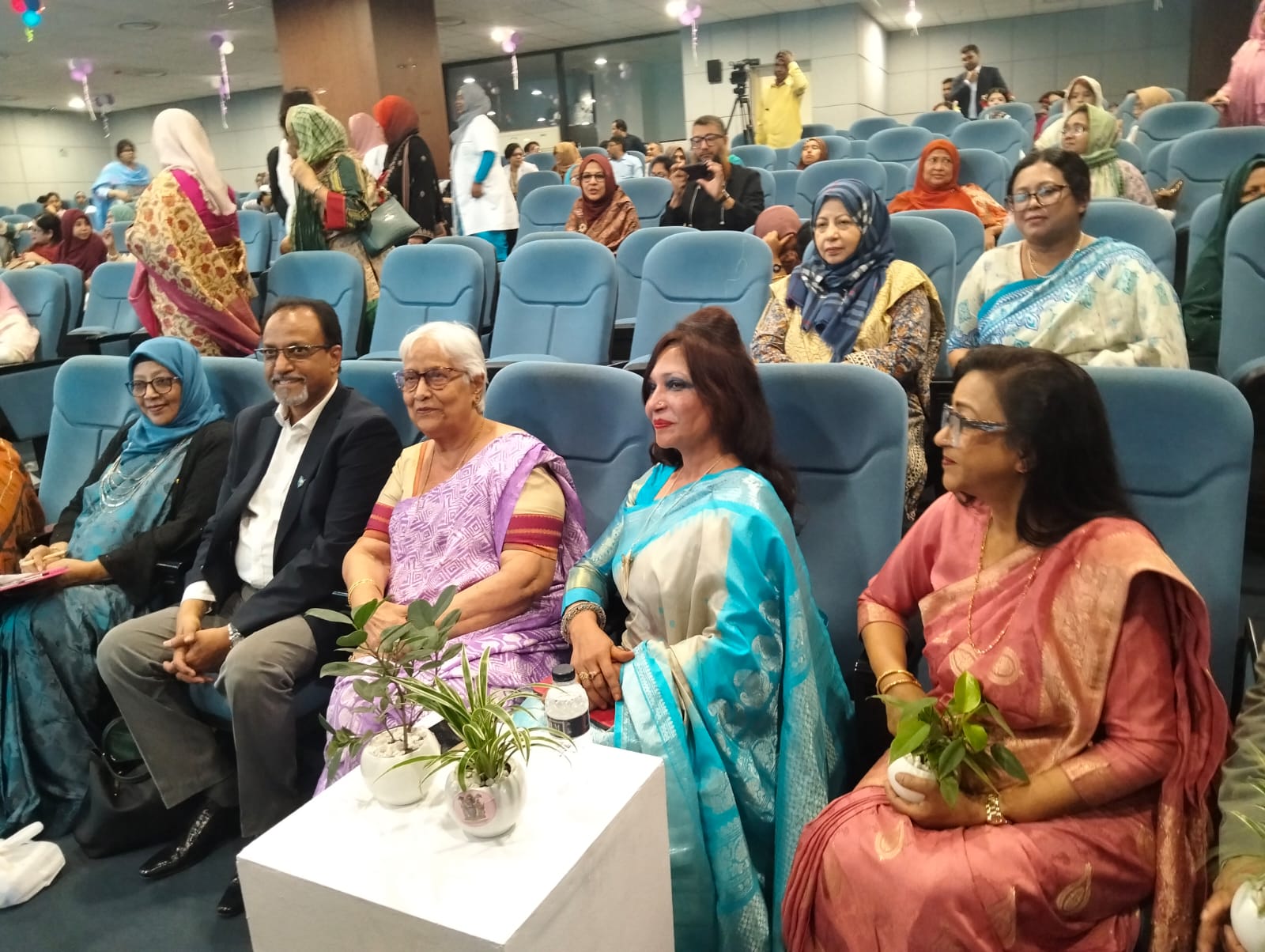
RCOG IRC Bangladesh calls for expanding women’s mental health services, ensuring mental well-being of doctors and preventing violence against health workers in the workplace. The event was attended by the Vice Chancellor of Bangladesh Medical University, Professor Dr. FM Siddiqui, as the chief guest, and the special guests were Professor Dr. Prabhat Chandra Biswas- Director General DGHS, Professor Rawshnara Begum- Former President OGSB, Professor Saeba Akhter- Former President OGSB, Professor Anwara Begum- Former President OGSB, and National Professor Sahela Khatun- Former President OGSB and OCOG IRC Chairman. The national anthem was performed by Dr. Proma Z Majumder. The daily performances were performed by Dr. Nusrat, Dr. Dola. Dr. Neera, the welcome speaker was Professor Khandaker Shahnawaz, Honorary Secretary RCOG IRC Bangladesh. The vote of thanks was expressed by Professor Dr. Farzana Diba. Held at the auditorium of BMU Super Specialized Hospital on Tuesday, the conference emphasized the importance of establishing mental health services as an integral part of the overall health system in Bangladesh. In addition to ensuring the mental well-being of women during pregnancy and postpartum, integrated services are needed for women who are victims of gynecological diseases, infertility, chronic lower abdominal pain, violence and psychological trauma. At the same time, it is also very important to ensure the mental well-being and safety of doctors and other health workers in the workplace. The chief guest and special guests delivered their valuable speeches from their respective positions, This was called for by Professor Dr. Fawzia Hossain, Chair of the International Representative Committee of the Royal College of Obstetricians and Gynaecologists, Bangladesh (RCOG IRC Bangladesh). She stressed the importance of ensuring integrated, humane and compassionate mental health care at all levels of the health system. She said that maternal health care does not only mean saving the life of the mother during pregnancy and childbirth. Ensuring the mental well-being, dignity, safety and quality of life of a woman is equally important. Even if physical illness is treated, if mental distress is ignored, that treatment is not complete. After pregnancy and childbirth, women can suffer from depression, anxiety and psychological trauma. However, women’s mental health is not limited to the maternity period. Women suffering from gynecological cancer, infertility, recurrent miscarriage and chronic lower abdominal pain can face deep mental stress, social isolation, uncertainty about the future and complications in personal and family relationships. Women who are victims of domestic violence and rape may experience trauma, depression, anxiety and chronic fear. Social stigma, victim blaming and limited access to confidential support exacerbate their suffering. Professor Dr. Fawzia Hossain said that effective integration of mental health services with antenatal and postnatal care, gynecology, cancer treatment, infertility treatment and long-term pelvic pain management must be ensured. Those who care for others also need care. The mental health of doctors is also an important public health and professional issue. A multicenter study published in the journal BMJ Open in September 2026 included 703 postgraduate trainee doctors from three government medical college hospitals in Bangladesh. The study found that 70 percent of doctors were suffering from burnout. Their average daily sleep time was 6.3 hours and 63.8 percent of doctors slept less than seven hours a day. About 47.1 percent of doctors did other work in exchange for additional remuneration in addition to their postgraduate training. Only 11.9 percent said they had consulted a mental health professional. The study found an independent association between burnout and short sleep duration. Being financially independent and getting enough sleep were also associated with less mental and emotional exhaustion. These results highlight the need to ensure postgraduate training structures, work schedules, adequate rest, financial stress, mentorship, and confidential mental health services. Professor Dr. Fawzia Hossain said that burnout and clinical depression are not the same thing. However, burnout is a significant occupational health problem, which requires institutional initiatives to address. She said that doctors dedicate themselves to the lives and well-being of others. But their own mental health, dignity, and work environment cannot be ignored. Seeking psychological help should never be seen as weakness or professional failure. Workplace violence against doctors and other health workers is also a serious concern in Bangladesh. A study published in the journal Discover Public Health in 2025 involved 600 doctors. 55 percent of them reported being victims of workplace violence. Verbal abuse was the most commonly reported form of violence – followed by physical assault. The study identified relatives of patients as the main perpetrators of violence. The program was presided over by Professor Dr. Fauzia Hossain, Chairman RCOG IRC Bangladesh. Workplace violence can create fear, stress, professional dissatisfaction and insecurity among doctors. It can also undermine teamwork, the retention of health workers in the workplace and the continuity and quality of patient care. RCOG IRC Bangladesh believes that doctors and health workers have the right to work in an environment free from fear, intimidation and assault. Violence against doctors and other health workers should not be accepted or ignored as an inevitable part of the medical profession. Hospitals and health authorities should strengthen effective reporting mechanisms, workplace safety, emergency response protocols, institutional accountability and appropriate measures in accordance with applicable laws. At the same time, transparent complaints mechanisms should be developed to maintain respectful communication between patients, their relatives and health workers. RCOG IRC Bangladesh calls for prioritizing these multiple issues. Incorporate mental health assessment, treatment and follow-up in maternal health, gynecology, cancer, infertility and chronic pain treatment. Ensure confidential, non-judgmental and trauma-informed services for women victims of domestic violence and sexual assault. Improve the work environment, create adequate rest opportunities, strengthen mentorship and ensure accessible and confidential mental health services. Ensure effective reporting systems, hospital security and appropriate institutional and legal measures against threats and attacks. Develop evidence-based guidelines, training, referral networks and criteria for assessing the well-being of patients and health workers in collaboration with professional organizations, educational institutions, health authorities and policymakers.
Professor Dr. Fawzia Hossain called for a coordinated effort between professional organizations, healthcare institutions, government authorities, and community-level service providers to make mental health and safety a common priority across the entire health system.
She said, a woman is not limited to her diagnosis, ability to bear children, pregnancy outcome or cancer diagnosis. Similarly, a doctor is not just a service provider – she is also a human being who needs safety, support and care. No woman should be forced to live her life in silence, being a victim of mental distress or violence. No doctor or health worker can be forced to accept insults, threats or attacks as part of their profession. We need to move from isolated services to integrated services, from prejudice to compassion and from violence in the workplace to safety and accountability. Ensuring care for women means ensuring the care and safety of those who serve women.
মঙ্গলবার, ২৭ অক্টোবর ২০২৬