
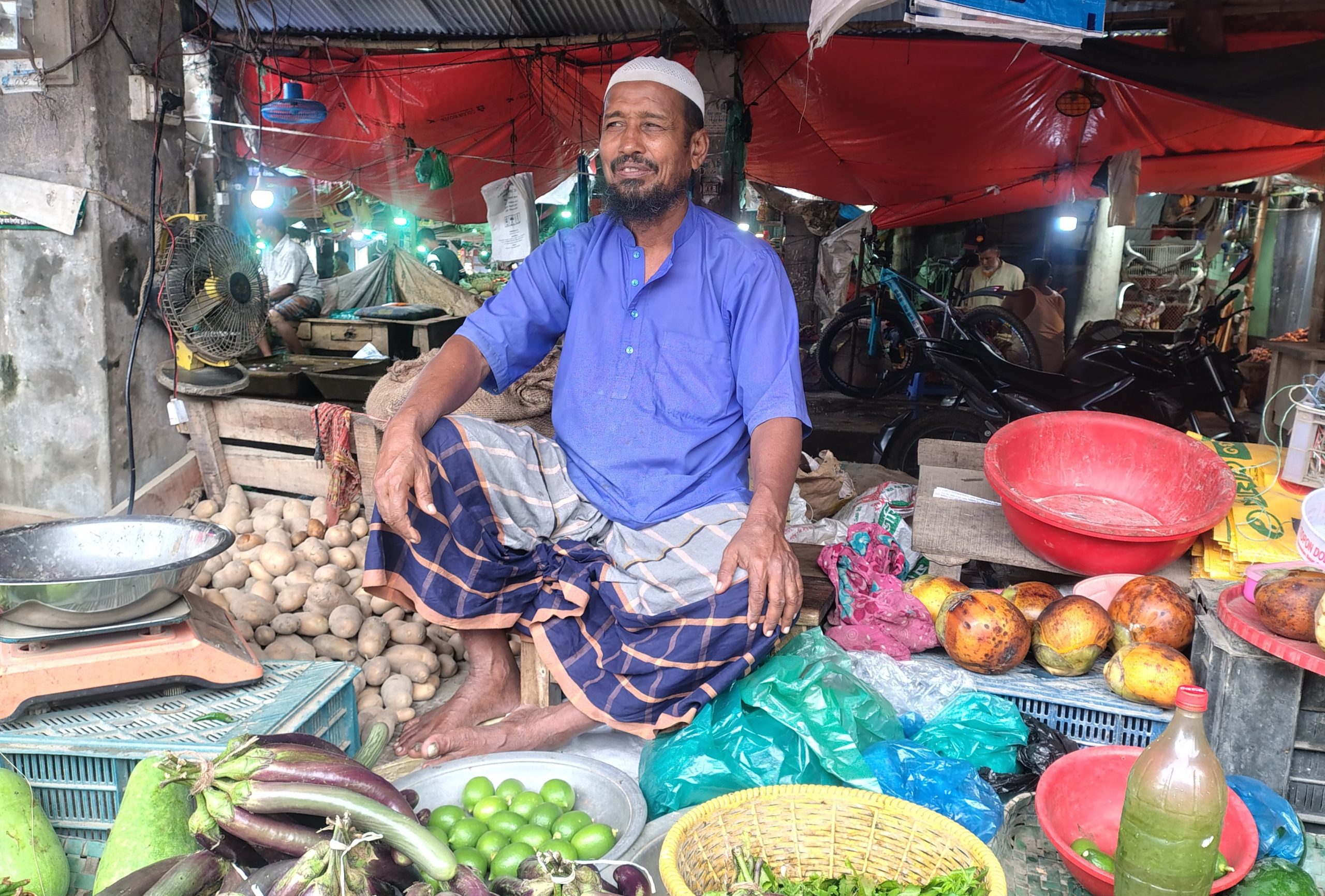
The light of dawn had not yet fully dawned. Silence surrounded him. Yet the busyness of the day had already begun for Abdur Rashid. With a bundle of national daily newspapers in his hand, a bag on his shoulder—he would wander from one market to another. Some would carry Ittefaq, some would carry Sangbad, and some would carry Jugantor, Prothom Alo, or Kaler Kantho. In this way, he delivered daily news to people’s homes.
Abdur Rashid of Rammohan Bazar in Barura Upazila of Comilla was involved in newspaper distribution for not just a year or two, but for a long 30 years. He made a name for himself among the local people by distributing newspapers with honesty, dedication, and a sense of responsibility.
That picture has changed with time. With the advancement of technology, people now have smartphones in their hands. News from home and abroad is available instantly on Facebook, online news portals, and various digital platforms. As a result, the demand for printed newspapers is gradually decreasing. The wave of that change has also reached Abdur Rashid’s life.
He left newspaper delivery in 2017. Now he makes a living selling vegetables at Rammohan Bazaar. Even though he has changed his profession, the memories of those three decades of newspaper delivery are still vivid in his mind.
Abdur Rashid said, “At one time, I sold about 200 copies of the newspaper every day. I would go out in the morning with the newspaper in my hand. I would deliver the newspaper to various areas including Harang, Maijkhar, Etbarpur in Chandina Upazila, and Rammohan Bazar and surrounding areas in Barura Upazila.”
He owned various national dailies with wide circulation in the country. He sold various newspapers including Sangbad, Ittefaq, Inqilab, Jugantor, Prothom Alo, Dainik Khabor, Bhorer Kagoj, Kaler Kantho and Amar Desh.
He said that he used to get commission on sales from the newspaper office. According to his explanation, he used to get a commission of 30 percent. The family used to run on that income.
Over the years, he has built relationships with various government and private institutions, schools, colleges, madrasas, and people from various walks of life while delivering newspapers. He sees the profession not only as a means of livelihood, but also as a responsibility.
Abdur Rashid said, “I tried to deliver the newspaper to people on time. Many people would wait. If someone was a little late at their house, they would ask – why didn’t the newspaper arrive today?”
At one time, six others were in this profession with him. That is, a total of seven people were involved in selling newspapers. Many of them have changed their professions with the changing times.
Abdur Rashid said, ‘There were seven of us. Now four are working with the newspaper. Siddique, Narayan Babu and Jamal are still working with the newspaper. And Shamsul Haque, Aliullah and I are no longer working in selling newspapers.’
He also said, “I quit working at the newspaper in 2017. Now I sell vegetables in the market. To be honest, I am better off selling vegetables now than before.”
But despite changing professions, the longest chapter in his life has been with newspapers. Abdur Rashid’s life, which has brought news to people every day for three decades, is like a real story of the transition from printed newspapers to the digital age.
Once upon a time, people used to wait for a newspaper in the morning. After receiving the newspaper, they would sit down with a cup of tea and read the news. There is a big difference between that time and today. Now, news from home and abroad reaches people within seconds on a smartphone.
And Abdur Rashid is a witness to that change. The man who ran around with a bundle of newspapers on his shoulder for three decades now sits in the market with a basket of vegetables. The way of life has changed, and so have times. But the memories of that long life of delivering news to people are still fresh in his mind.
Abdur Rashid’s story is not just a story of a hawker changing his profession; it is also a living reflection of the long journey of print newspapers and the changes in news consumption in the digital age.