
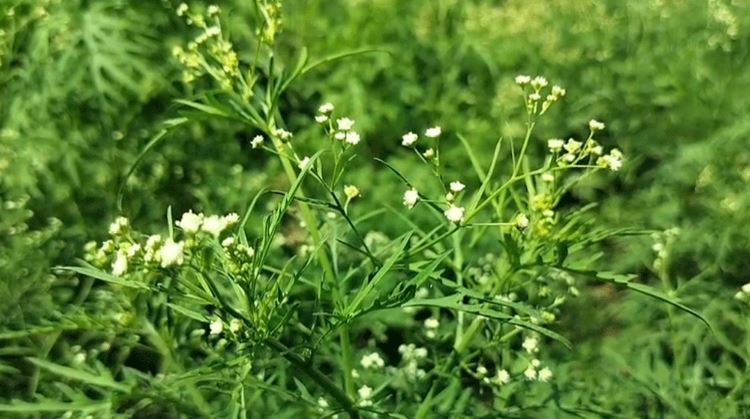
The spread of poisonous ‘Parthenium’ weed is increasing at an alarming rate in the entire northern part of the country, including the Barendra region of Rajshahi. This invasive plant, which is spreading rapidly in agricultural lands, roadsides, railway lines, around educational institutions and wastelands, has emerged as a new major threat to agricultural production, environment and public health. The seeds of this highly harmful weed are easily spread far and wide by flying in the wind. The seeds of this plant, which is tolerant to harsh sun and drought, can survive in a dormant state underground for almost a century. As a result, in addition to absorbing the nutrients of the crops, it has now become one of the biggest fears of the farmers of Barendra land. However, it is known that there is still a considerable lack of awareness among the general public and farmers at the field level about the dangers of the plant.
The Charghat representative of Rajshahi said that this Parthenium has grown on a large scale along the roads and in crop lands in various areas of Yusufpur, Nimpara, Sardah, Shalua, Bhayalakshmipur and Charghat Sadar Unions of the upazila. Local farmers complain that it is growing again a few days after clearing the land, resulting in additional costs in cultivation and a threat of crop failure. Similarly, Parthenium has been spreading for several years in various unions, municipal areas and along the railway lines of Natore. Its tiny seeds are spread everywhere through irrigation water and cow dung, and after farmers kill it once, it grows again as soon as the crop seedlings grow. Jahangir Alam Shah, founding teacher of Shah Agricultural Library Museum in Naogaon, said from field experience that its spread is rapid as the soil in the Barendra region is very suitable for Parthenium. Although the farmers here are careful about clearing weeds in the fields, they do not have a proper idea of how toxic it is.
Occupational and environmental health expert and Rajshahi Medical University (RAMU) sub-college inspector Dr. Joha Mohammad Meherwar Hossain said he has been researching Parthenium since 2011. A study he conducted in Rajshahi and surrounding areas in 2014 and 2015 found that people in areas where Parthenium is prevalent are suffering from allergies and long-term respiratory diseases several times more than normal. Diseases caused by exposure to this plant are not easily cured and require advanced treatment. This plant, which looks like a mature coriander plant, has small white flowers and thin leaves, and its pollen can cause allergies, skin itching, unbearable headaches, frequent fever and eye problems if it enters the human body. If it comes into contact with cattle while grazing, it causes diseases such as swelling of the body, severe fever and olan ripening, and if this weed enters the stomach of the animal, it causes severe poisoning.
According to research data, in 2008, Professor Steve Adkins of the University of Queensland, Australia, along with a group of local agricultural scientists, first identified this weed in the Jessore region. Later, from 2014 to 2017, a survey was conducted in 35 districts of the country under the leadership of agricultural scientist Dr. Ilias Hossain, in which Dr. Zoha Meherwar was also involved. In that research paper published in an international agricultural journal in 2019, Parthenium was identified as the country’s most worrisome weed and called it a threat to food security. Its prevalence is highest especially in the greater Rajshahi, Jessore and Mymensingh regions bordering India.
Naldanga Upazila Health and Family Planning Officer Dr. Junaid Hossain Lelin, Upazila Veterinary Surgeon Dr. Parvez Ahmed, Charghat Upazila Agriculture Officer Agriculturist Al Mamun Hasan and Naldanga Upazila Agriculture Officer Agriculturist Sabuj Ali said that this plant survives easily even in adverse environments and it is important to make farmers aware of it through a massive campaign now. The Agriculture Department has advised that farmers should uproot this weed before it flowers and seeds or use gloves and masks to uproot it safely and bury it in the ground or burn it to destroy it. Those concerned fear that if coordinated steps are not taken, the public health and agricultural sector of this region will face a major disaster in the future.