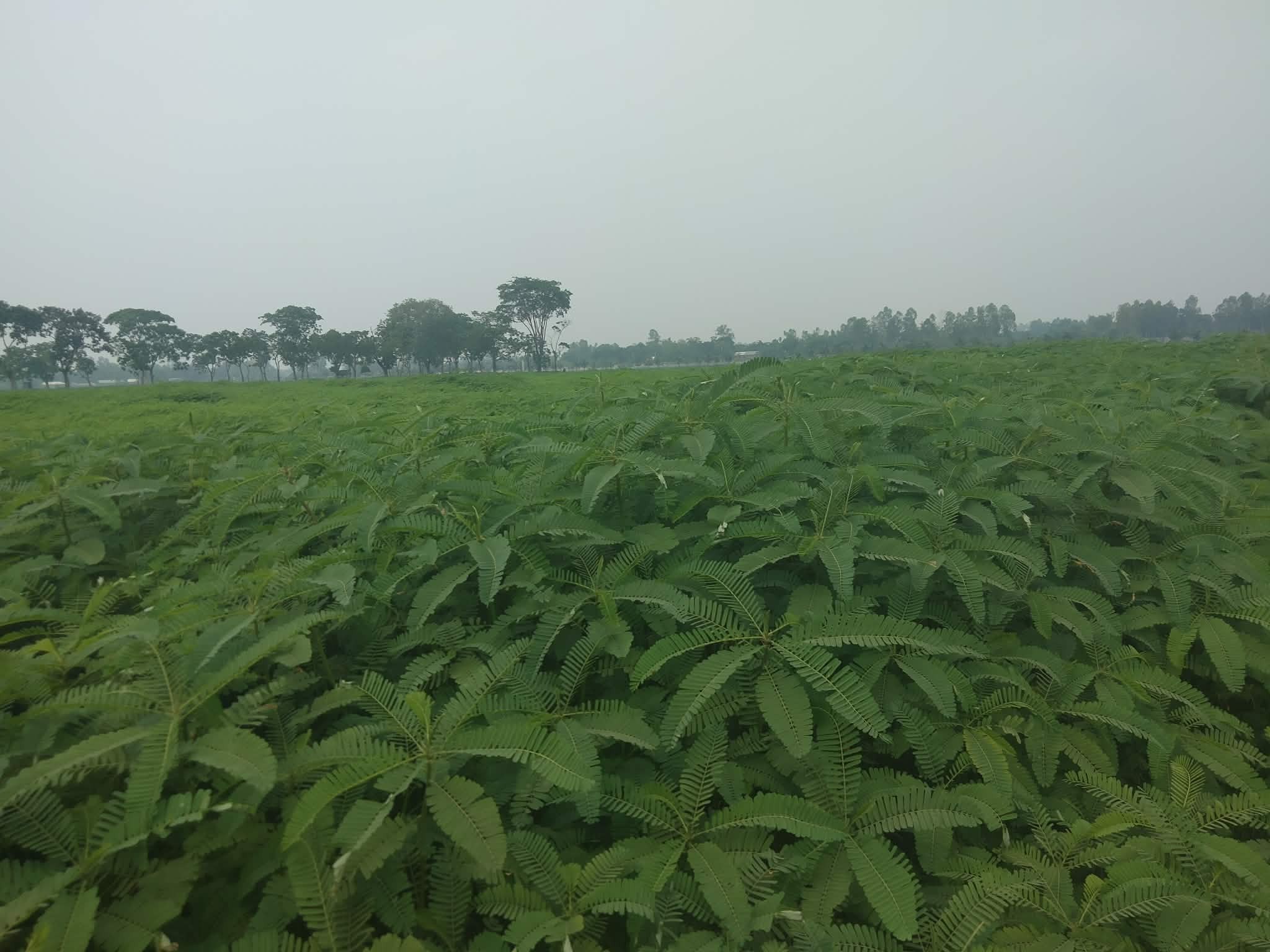
The Bangladesh Agricultural Development Corporation (BADC)-run seed potato
production farm in Domar, Nilphamari, has been cultivating dhaincha on a large scale to increase soil fertility,
reduce the use of chemical fertilizers and increase crop productivity. This season, dhaincha has been cultivated on
200 acres of land on the farm. Its use as green manure is playing an important role in restoring soil health and
sustainable agricultural management.
The farm authorities said that when the dhaincha trees reach a height of 4 to 5 feet, they are ploughed with a
tractor and mixed with the soil. Within a few weeks, the trees decompose and turn into organic matter, increasing
the fertility of the soil. According to agricultural scientists, dhaincha is an excellent green manure, which plays an
effective role in increasing the organic matter of the soil, improving water retention capacity and improving the
structure and texture of the soil.
According to farm sources, although this 601-acre farm has been producing foundation seed potatoes for a long
time, a large amount of land used to lie fallow for a few months after the potatoes were harvested. As a result, the
productivity and nutritional value of the land gradually decreased. In order to overcome this situation, initiatives
were taken to cultivate dhaincha on fallow land a few years ago. Especially since many lands on the farm had an
abundance of sandy soil, the desired yield could not be obtained. Since 2022, the quality of the land has increased
significantly due to the combination of sandy soil with Athel soil and the regular use of organic fertilizers and
dhaincha. As a result, good yields are currently being obtained in the production of foundation seeds of Boro, Aush
and Aman rice in addition to potatoes.
After the current Deputy Director, Agriculturist Abu Taleb Miah took charge, the fallow lands of the farm were
brought under cultivation step by step. Now, maximum utilization of the land is being ensured through the
production of various seasonal crops throughout the year.
Agriculturist Abu Taleb Miah, Deputy Director of Domar Seed Potato Production Farm, said that during the current
production season, about 500 acres of land have been used to produce seed potatoes and breeder seed potatoes.
After harvesting the potatoes, the lands are not left fallow, and dhaincha is being cultivated as green manure every
year. In addition to increasing soil fertility, dhaincha increases nutrient retention and water retention capacity. It
also improves soil structure and texture, which is very beneficial for the next crop.
He further said that after being incorporated into the soil, the dhaincha plant provides about 90 to 120 kg of
nitrogen per hectare, which is equivalent to about 200 to 220 kg of urea fertilizer. As a result, the requirement of
urea fertilizer in the production of subsequent crops is significantly reduced. In the long run, this will help in
protecting soil health, reducing production costs and ensuring environmentally friendly agricultural management.
Agricultural experts say that due to climate change and excessive use of chemical fertilizers, soil fertility is
decreasing in many areas of the country. In such a situation, the initiative to use green manure like cowpea is an
effective example of sustainable agricultural management. It helps in increasing the organic matter of the soil and
also reduces the attack of diseases and weeds.
According to BADC sources, Domar and Debiganj farms together have a total of 601 acres of cultivable land. Of
this, 211 acres will be used for Aush paddy, 200 acres for Dhaincha and the remaining land for Aman paddy. Most
of the produced crops will be stored and distributed as foundation seeds, which will play an important role in
providing quality seeds to the farmers of the country.
According to those concerned, by bringing fallow land under production system and using green manure like
dhaincha, the Domar BADC farm has now become a successful model of sustainable and environmentally friendly
agricultural management. Its benefits will contribute significantly to the country's seed production and food
security system in the future.
সোমবার, ৮ জুন ২০২৬