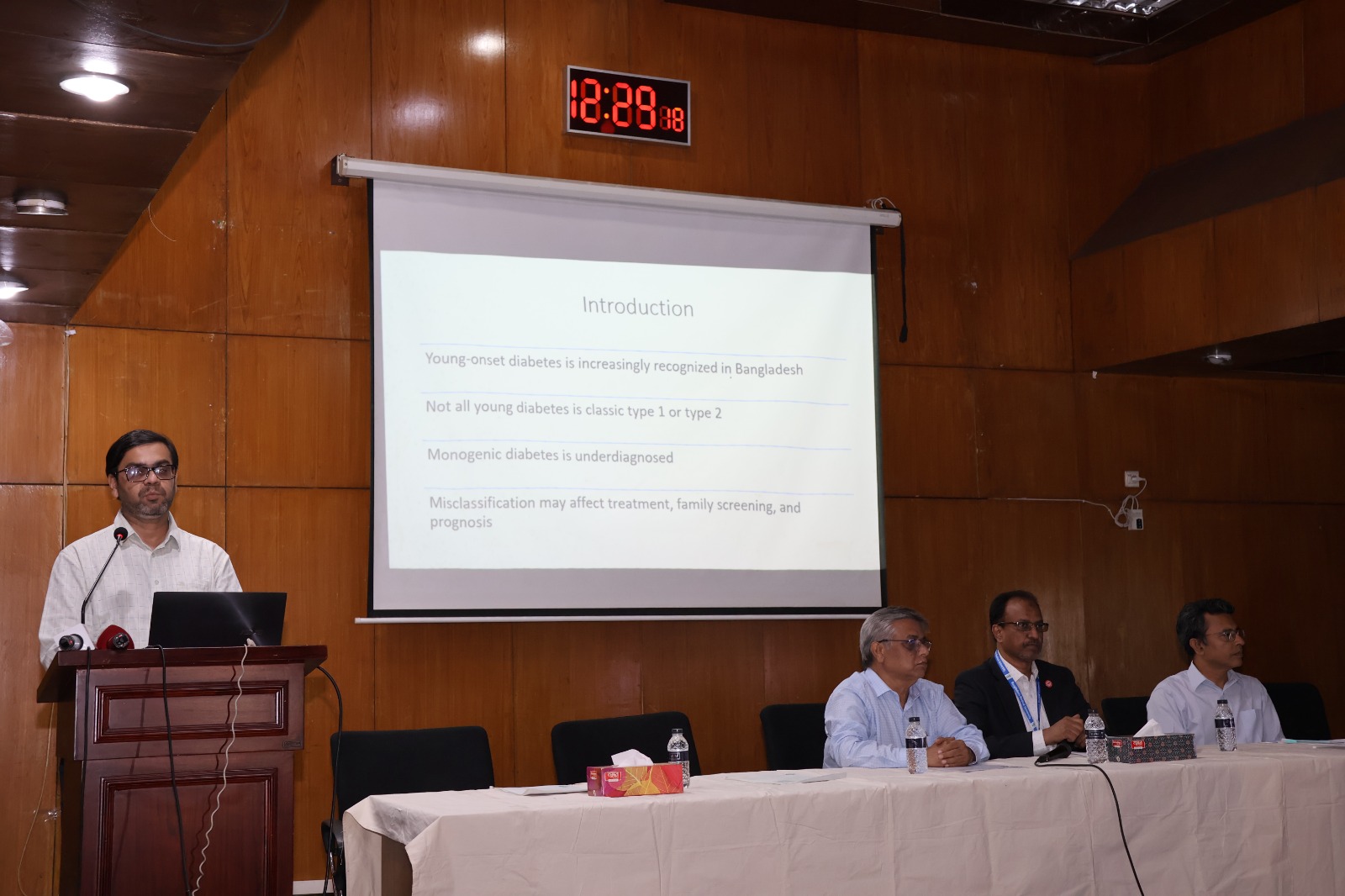
The results of a study on young diabetic patients in Bangladesh were published today, Thursday, April 16, 2026, at Bangladesh Medical University (BMU). It was reported that 1 in 5 young diabetic patients are suffering from a special type of diabetes called MODY. Experts emphasized the importance of MODY detection and genetic research to ensure proper treatment of diabetes. It was reported at a program organized at BMU’s Shaheed Dr. Milon Hall that about 1 in 5 suspected young diabetic patients participating in the study had changes in some genes related to a special type of diabetes known as ‘Maturity Onset Diabetes in the Young (MODY).’ That is, about 1 in 5 suspected young patients had changes in some specific genes, which are related to a special type of diabetes known as MODY. These genetic changes were mainly found in lesser-known genes, which are different from those in Western countries. It is difficult to clinically distinguish patients who have and do not have these genetic changes. These results are preliminary and exploratory; more research is needed before they can be applied in treatment. This type of diabetes is not new, nor is type 1 or type 2 diabetes. Therefore, it is important to identify this type of diabetes to ensure proper medical care for the patient and to keep young people safe from this disease. It was reported at the event titled ‘Dissemination of Published PhD Research of Dr. Mashfiqul Hasan’ that the prevalence of diabetes among young people in Bangladesh is increasing, but in many cases it does not fall into the conventional type of diabetes. This study suggests that: The genetic pattern of diabetes in Bangladesh may be different from other regions of the world. Current diagnostic methods may not be fully suitable for our population. Therefore, it is important for Bangladesh to find special research and solutions in this area. The study was recently published in the internationally recognized Q-1 journal—which indicates its global scientific importance. The chief guest of the event, Vice Chancellor of BMU, Professor Dr. FM Siddiqui, said that this type of genetic study is very complex and difficult in Bangladesh. However, more such genetic research is needed for patients and doctors. This will make a special contribution to providing proper medical services to patients. Chaired by BMU’s Endocrinology Department Chairman Professor Dr. MA Hasanat, the event was addressed by researchers Dr. Mashfiqul Hasan, Professor Dr. Indrajit Prasad, Dr. Mohammad Salimullah, and others.
They said that the main goal of this event is to disseminate important research findings among doctors, students and researchers, increase awareness about diabetes among the youth and encourage further research and improved patient care in Bangladesh. They also said that it has also been seen that this type of diabetes can be controlled with some drugs, and does not require any drugs. Therefore, if this type of diabetes is not detected, proper treatment may be hampered. Edited by Dr. Saiful Azam Ranju.
বৃহস্পতিবার, ১৬ এপ্রিল ২০২৬