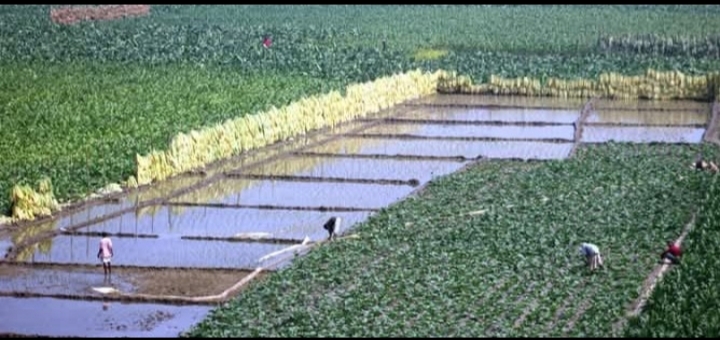
The Teesta River, the lifeblood of the north, is facing a new crisis today. Tobacco cultivation is rapidly expanding across the vast char areas that emerge on the riverbed during the dry season. Despite the increasing interest of farmers in the hope of higher profits, the excessive use of chemical fertilizers and pesticides in this cultivation is polluting the Teesta water. As a result, the reproduction of various aquatic animals including fish and the natural ecosystem of the river are facing a serious threat.
According to local sources, tobacco cultivation has spread widely in the Teesta char areas of Rangpur and Lalmonirhat districts, especially in Gangachara, Aditmari, Kaliganj and Hatibandha upazilas. Although it is possible to cultivate various crops including paddy, wheat, maize, potato, onion, garlic, chilli during the dry season, farmers are increasingly turning towards tobacco cultivation due to higher profits.
Farmers claim that despite the expense of tobacco farming, the profit is relatively high. This trend has increased rapidly in the last two decades due to the encouragement of tobacco companies, easy loans, and advance contract-based purchasing. Those concerned say that tobacco farming requires 5 to 6 times more chemical fertilizers and pesticides than other crops, which directly poses a serious risk to the environment.
Samad Sarkar, a farmer from Char Mohipur area of Gangachara upazila in Rangpur, told the reporter, “I have been cultivating tobacco on 12 to 15 bighas of land every season for about 25 years. “Other crops also yield, but the profit is less. Tobacco has a higher income.”
However, on the question of water pollution, he said, “During the dry season, there is less water in the Teesta, and there are also fewer fish. So it is not entirely correct that fish are decreasing only because of tobacco farming.”
Farmer Majid Mia from the same area expressed the same opinion, saying, “Earlier we used to cultivate wheat, cotton, onion and garlic. Now everyone is cultivating tobacco. Although the cost is high, the profit is much higher.”
However, he admits that the use of chemicals causes some water pollution.
On the other hand, local fishermen disagree with this statement. They claim that due to tobacco cultivation, the fish population in the Teesta River is decreasing day by day and reproduction is being severely disrupted.
Milon, a fisherman from the same area, said, “Before tobacco farming started, there were many fish in the Teesta. Now the river is almost empty. There is no water in the dry season, and there are no fish like before in the rainy season.” He complained, “The water is being polluted due to excessive use of chemicals in tobacco farming. This is destroying fish eggs and reducing reproduction. As a result, our livelihoods are being threatened.
Environmentalists say that if tobacco cultivation continues indiscriminately in the Teesta char areas, the river’s biodiversity will be severely damaged in the future. At the same time, there will be a decrease in soil fertility, groundwater pollution, and a negative impact on human health.
In this situation, experts are emphasizing the need to formulate strict policies to control tobacco cultivation, encourage farmers to cultivate alternative profitable crops, and take coordinated steps to protect rivers.
When asked about this, agriculturist Sirajul Islam, Additional Director (Acting) of the Department of Agricultural Extension, Rangpur region, said, “It is difficult to conduct regular surveys as the land in the char areas is temporary. Although farmers have been asked to refrain from tobacco cultivation, they are not complying due to the influence of tobacco companies. This is also disrupting food grain production.”
Aynal Haque, director of the Rangpur Divisional Fisheries Department, said that two decades ago, 140 to 150 species of fish were found in the Teesta River. Currently, that number has reduced to only 30 to 35 species, and that too in small quantities.
According to him, “This situation has been created due to water shortages during the dry season as well as excessive use of chemicals in tobacco cultivation.”
রবিবার, ৫ এপ্রিল ২০২৬