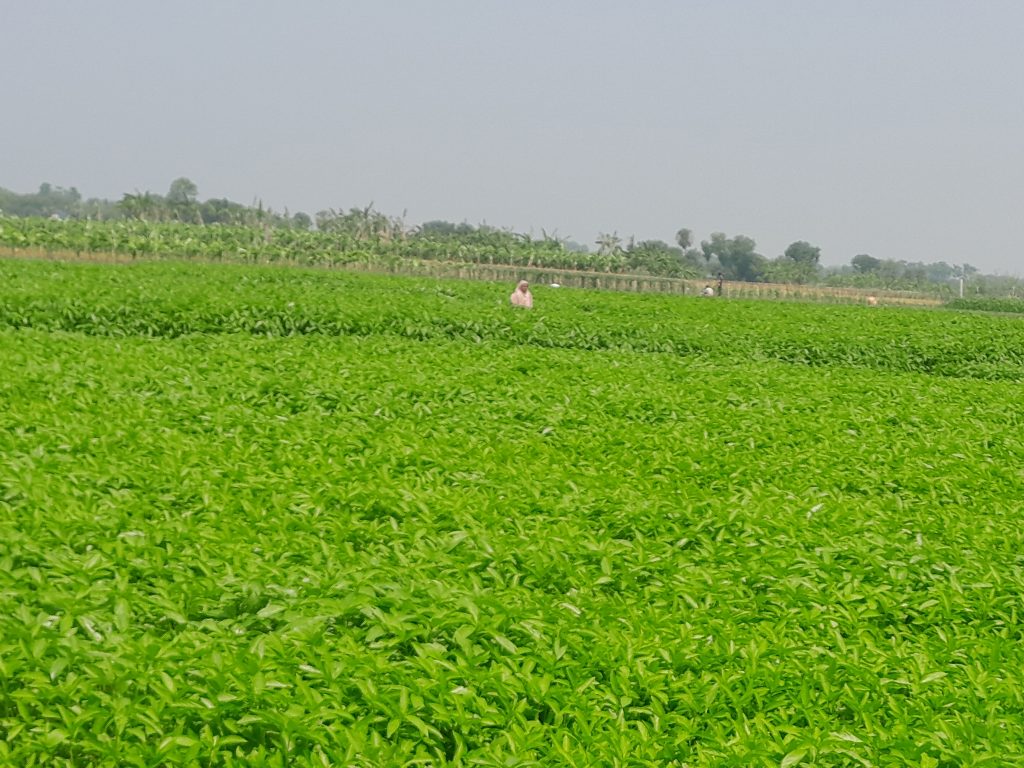

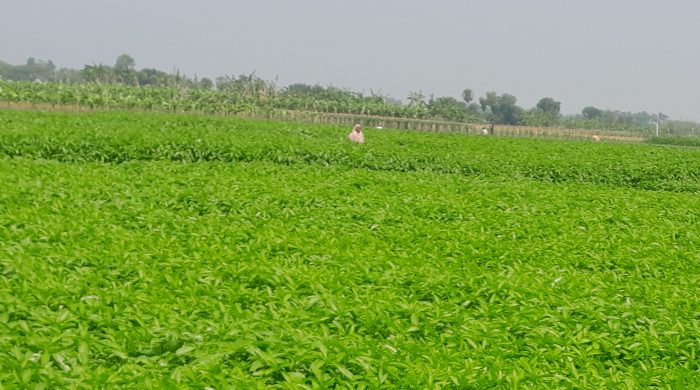
In the last 10 years, the price of jute has increased almost threefold in Rajshahi due to increasing demand. As a result, the cultivation has also increased almost twice. In the current season, jute cultivation in the district has increased by about 7,000 bighas. Those concerned say that the golden fiber’s good days have started returning again.
According to relevant sources, jute production in Rajshahi has increased by 22,946 metric tons in the last 10 years. During this period, another 7,000 hectares of land have come under cultivation. This information has been revealed in the report from 2016 to 2026 given by the Rajshahi District Agricultural Extension Department. Along with the increase in jute prices, jute cultivation and production have increased in Rajshahi with the cooperation and advice of the Agriculture Office. In 2016, jute yield on 11,260 hectares of land was 22,836 metric tons. After 10 years, in 2025, 45,782 metric tons were produced on 17,305 hectares of land. Interest in jute cultivation has increased among farmers due to the good prices of jute for the last 4 years.
Kalam, a farmer from Duari area of Paba Upazila, said, “The cost per bigha, including all expenses including land lease, seeds, fertilizer, labor, irrigation, is about 20,000 taka.” The yield per bigha is 9 to 10 maunds. Last year, excluding the cost per bigha, I got a profit of 16 to 18 thousand taka.” Other farmers in his area have also benefited from jute cultivation. That is why they have cultivated jute on more land this time.
According to the Rajshahi District Department of Agricultural Extension, jute was cultivated on 18,305 hectares of land in the district this year, which is 7,000 bighas more than the set target. Due to favorable weather, jute cultivation is currently in good condition. The Department of Agricultural Marketing said, “We are regularly monitoring the market so that the jute produced by farmers is sold at a fair price. The market committee has been given guidelines so that traders do not reduce prices unnecessarily and the fair rights of farmers are ensured. Jute is a traditional exportable crop of Bangladesh. Therefore, to keep farmers profitable, control over middlemen and the market system must be strengthened.” The government is working to implement the Compulsory Jute Packaging Act of 2010 to increase domestic consumption. Besides, farmers are getting a fair price due to the raw jute export policy.”
Sources say that there are a total of seven jute mills in the district, including Rajshahi Jute Mill. These mills purchase jute directly from farmers at a fair price. The largest of these, Rahman Jute Spinners in Puthia Upazila, has a production capacity of 100 metric tons. In addition, Rahman Jute Mill has a production capacity of 20 metric tons, Hasen Jute Mill has a production capacity of 18 metric tons, and Nowahata Jute Mill and Aman Jute Fibers have a production capacity of 15 metric tons. In all, farmers not only got a good yield last year, but also got the desired price. Those concerned believe that if the price of jute remains at this level, cultivation will increase further in the future.
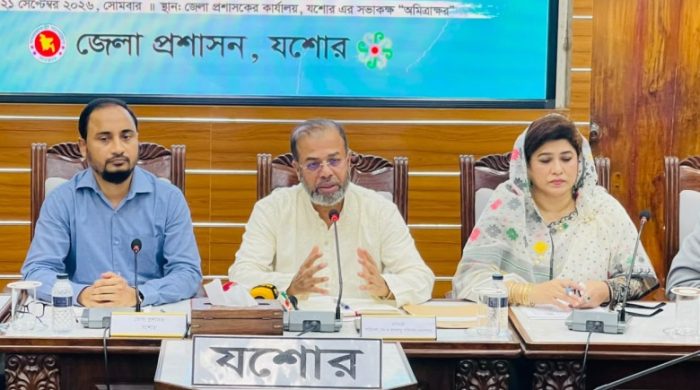
Deputy Director of Rajshahi District Agricultural Extension Department Mohammad Nasir Uddin said that necessary advice is being provided to farmers to increase interest in jute cultivation, including distribution of seeds, fertilizers and pesticides. Above all, it has been possible to increase jute cultivation in this region due to motivating farmers. The use of jute bags and sacks has increased due to the government ban on polybags. Which is directly benefiting farmers.
Chairman Editorial Board : Md. Shajahan Mia
Chief Editor : Md. Humayoun Rashid, Editor : Ayub Ali Sarder
Publisher : Tahmina Akter Saima
Office : Motaleb Mansion (5th Floor), 2 R. K. Mission Road, Dhaka -1203 Phone : 01711681147,01710453070
Email : morningobserver@gmail.com
All rights reserved © 2025 dailymorningobserver