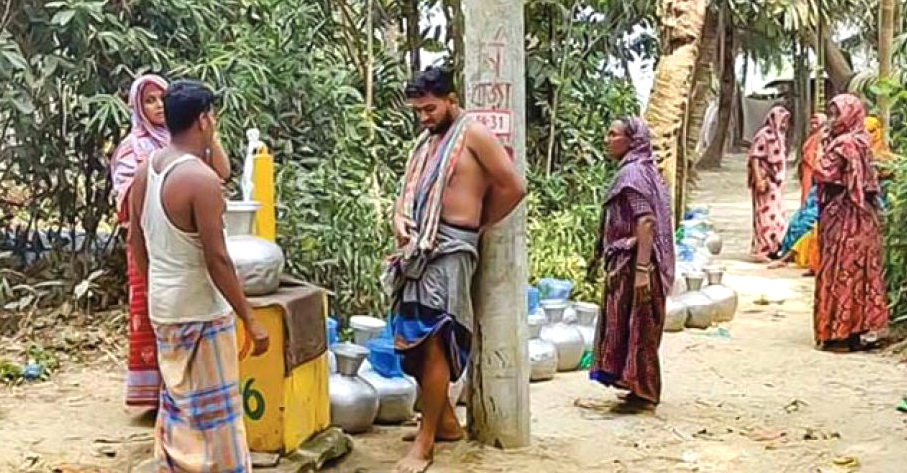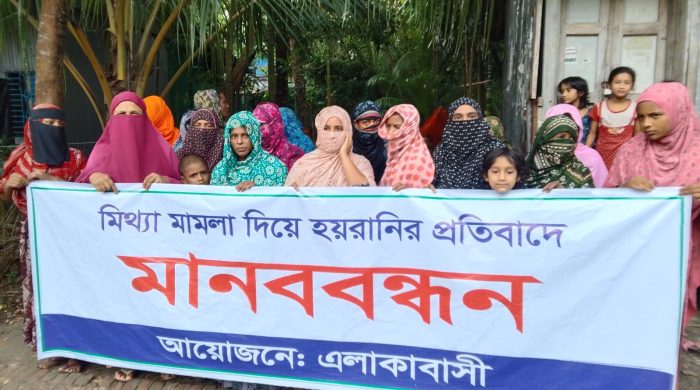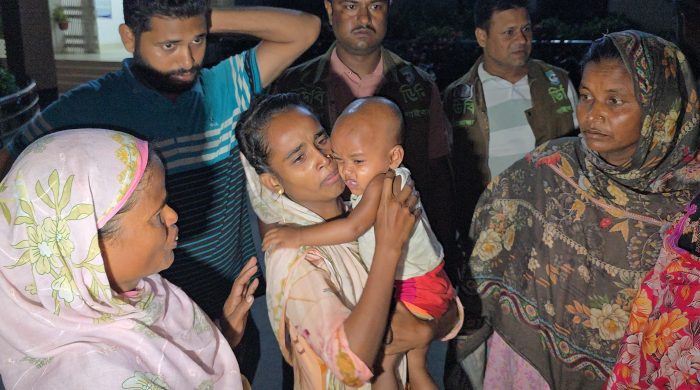

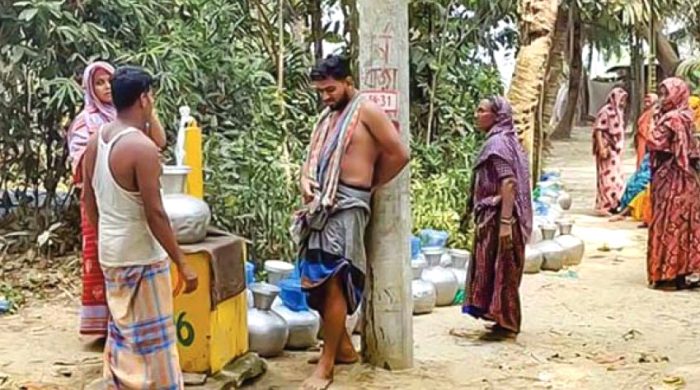
There has been a severe water crisis in the entire Barendra region, including Godagari in Rajshahi, for a long time. Due to climate change, alarming decrease in rainfall, adverse effects of Farakka Barrage and uncontrolled groundwater extraction, the situation in vast areas of Rajshahi, Naogaon, Chapainawabganj, Natore and Joypurhat is becoming dire day by day. Although the government has declared this region as a water-stressed area, in reality no one is heeding the government restrictions.
According to experts, due to the rapid decline in the groundwater level, water is not being drawn even from deep tube wells in many areas. As a result, not only is the cost of agricultural production increasing, but thousands of acres of cropland are also becoming uncultivated. The biggest crisis has been that of clean water; in many areas, people have to travel miles and miles for drinking water. In all, about one crore people in this region are now directly facing water shortage.
The investigation revealed that the government gazette published on November 6 last year banned the extraction of groundwater for any purpose other than drinking water for the next 10 years. According to the ‘Water Act-2013’, the use of water from deep tube wells for irrigation or industries is a punishable offense and there is also a ban on the construction of new tube wells. But this directive has no effect on the ground level. Many people are illegally installing submersible pumps using residential electricity connections and irrigating paddy fields day and night. Although there is minimal monitoring by the local administration, in reality this illegal extraction is not being stopped.
Water level is falling: According to the Water Resources Planning Organization (WORPO), the water level in the Barendra region was only 26 to 30 feet below the ground in 1985-90. In 1994, it dropped to 35 feet, in 2004 to 51 feet and in 2013 to 60 feet. Currently, the water level in many areas has dropped to 80 to 90 feet. In some places, water is not visible even after digging 113 feet and even 200 feet deep. Meanwhile, a study by the Institute of Bangladesh Studies (IBS) of Rajshahi University has shown that in 1980, the water level was 39 feet below, but in 2016 it dropped to 118 feet. Currently, even if the water level is slightly below 100 to 150 feet, it is not possible to draw it from ordinary deep tube wells.
According to researchers, the Barendra region is the driest and hottest region of the country. During summer, the temperature here often reaches 40 to 46 degrees Celsius. An analysis of the annual rainfall data of the region from 1964 to 2010 has shown that the amount of rainfall has decreased at an alarming rate in the last two decades. Due to the long drought during the year, the natural recharge of water under the ground is not happening. Researchers fear that this crisis may become permanent if the rainfall decreases further by 2050.
Private pumps out of control: According to the Barendra Multipurpose Development Authority (BMDA), although the government rules allow a maximum of 11,400 deep tube wells, thousands of shallow and deep tube wells have been installed by private initiatives. As a result, the main underground water reservoir or aquifer is being severely damaged.
In this regard, BMDA Additional Chief Engineer Abul Kashem said, BMDA extracts only 27 percent of the water. The rest of the water is being extracted through privately owned pumps, which is practically beyond our control. He further said that BMDA has undertaken various irrigation projects to increase the use of surface water. Plans to conserve rainwater by re-excavating canals, ponds and water bodies are also being implemented. However, according to the concerned officials, it is not possible to deal with this major disaster not only through legal prohibitions, but also without sustainable alternative measures and strict administrative monitoring.
Chairman Editorial Board : Md. Shajahan Mia
Chief Editor : Md. Humayoun Rashid, Editor : Ayub Ali Sarder
Publisher : Tahmina Akter Saima
Office : Motaleb Mansion (5th Floor), 2 R. K. Mission Road, Dhaka -1203 Phone : 01711681147,01710453070
Email : morningobserver@gmail.com
All rights reserved © 2025 dailymorningobserver